


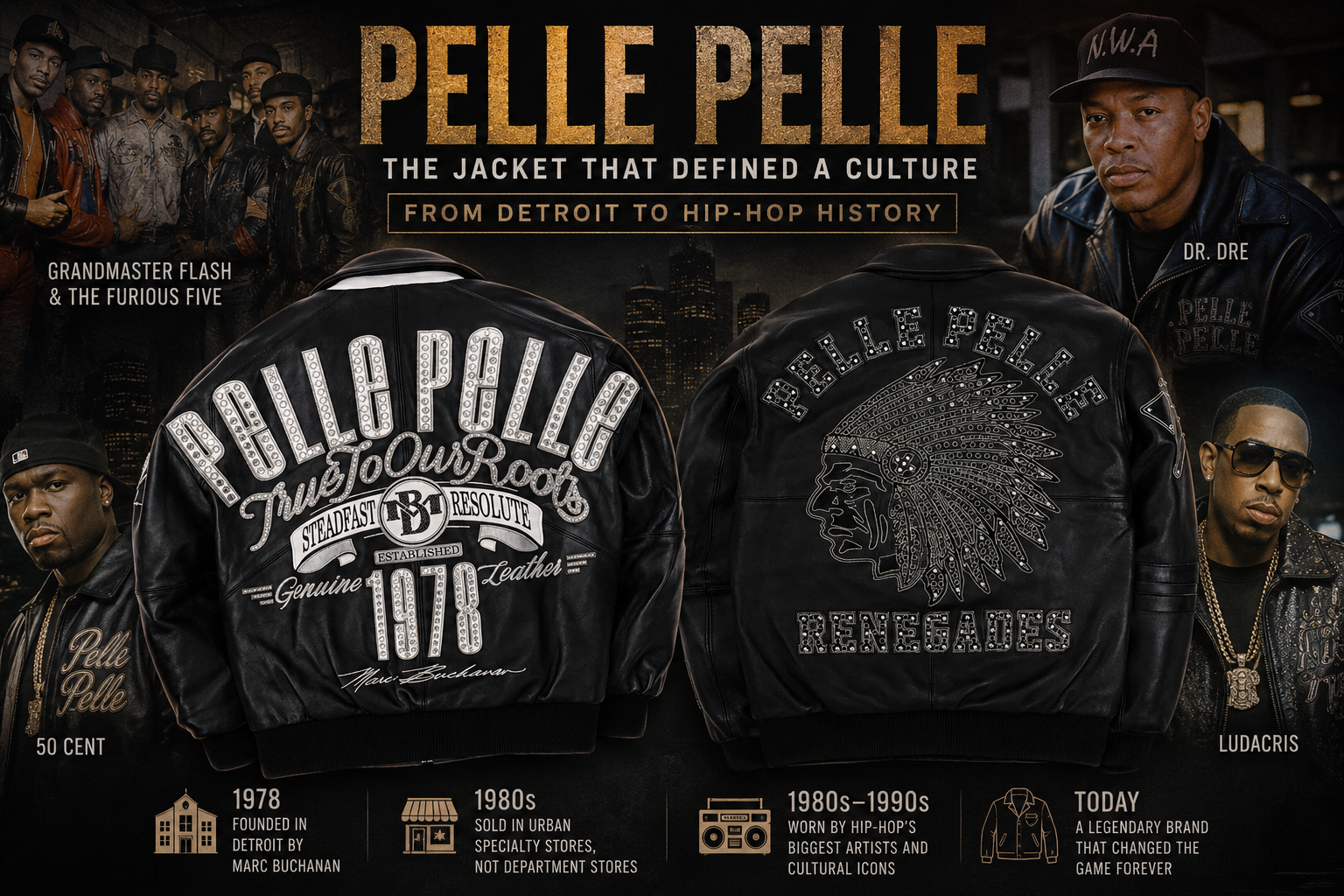
Pelle Pelle became a hip-hop fashion icon through a specific combination of bold, embellished design and a distribution strategy that put the brand directly in the hands of the culture that would come to define it, rather than through mainstream department store channels. From Grandmaster Flash and the Furious Five in its early years to 50 Cent, Ludacris, and later Dave East and Chief Keef, the brand's connection to hip-hop spanned multiple generations of artists. After a decline and quiet exit from the U.S. market by 2018, founder Marc Buchanan's 2024 licensing partnership with The Ature Group marked a new chapter for the brand's legacy.
Introduction
Few fashion brands are as closely tied to a music genre as Pelle Pelle is to hip-hop. What started as a small Detroit leather company in the late 1970s grew into a defining name worn by some of the biggest figures in hip-hop culture. This guide covers the full story behind that rise, what the name actually means, who wore the brand, and who owns Pelle Pelle today.
Featured Snippet Answer
Pelle Pelle became a hip-hop fashion icon because founder Marc Buchanan designed bold, brightly colored, heavily embellished leather jackets and sold them through small urban specialty stores rather than department stores, putting the brand directly in front of the emerging hip-hop community. Throughout the 1980s and 1990s, artists including Grandmaster Flash and the Furious Five, Dr. Dre, 50 Cent, and Ludacris wore the brand, cementing its place in hip-hop fashion history.
Why This Matters
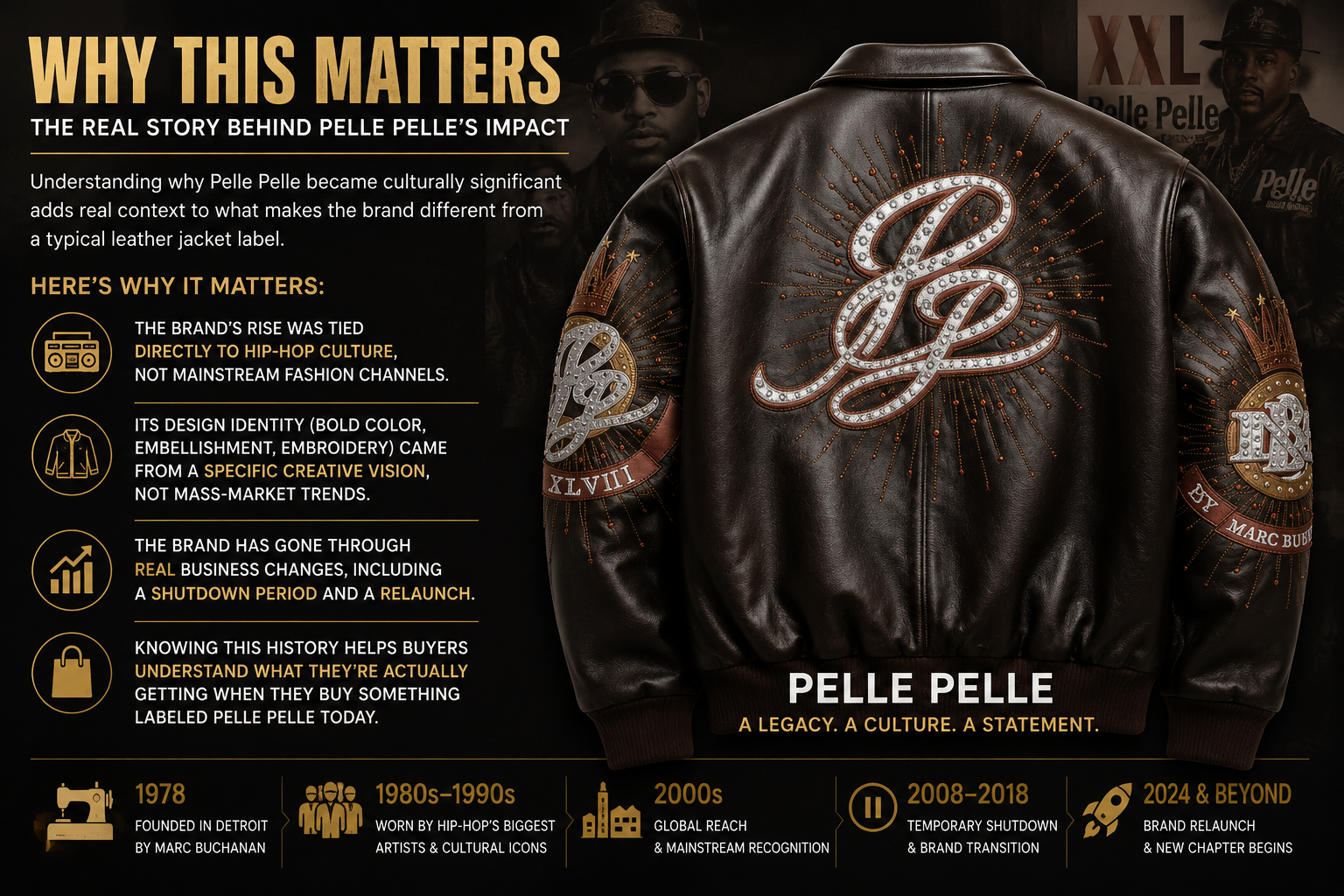
Understanding why Pelle Pelle became culturally significant adds real context to what makes the brand different from a typical leather jacket label.
Here’s why it matters:
- The brand’s rise was tied directly to hip-hop culture, not mainstream fashion channels.
- Its design identity (bold color, embellishment, embroidery) came from a specific creative vision, not mass-market trends.
- The brand has gone through real business changes, including a shutdown period and a relaunch.
- Knowing this history helps buyers understand what they’re actually getting when they buy something labeled Pelle Pelle today.
What Does “Pelle Pelle” Mean
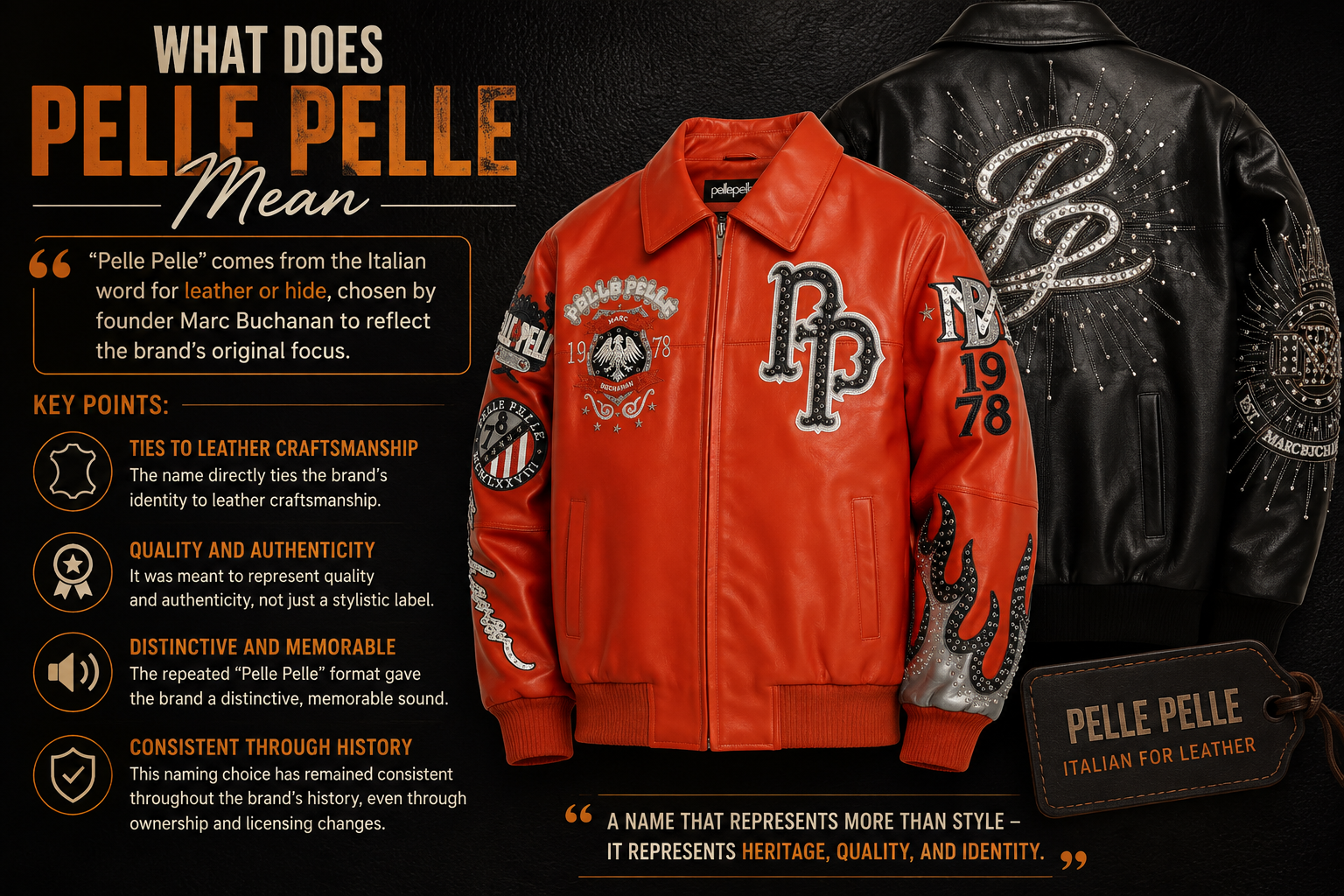
“Pelle Pelle” comes from the Italian word for leather or hide, chosen by founder Marc Buchanan to reflect the brand’s original focus.
Key points:
- The name directly ties the brand’s identity to leather craftsmanship.
- It was meant to represent quality and authenticity, not just a stylistic label.
- The repeated “Pelle Pelle” format gave the brand a distinctive, memorable sound.
- This naming choice has remained consistent throughout the brand’s history, even through ownership and licensing changes.
How Pelle Pelle Started
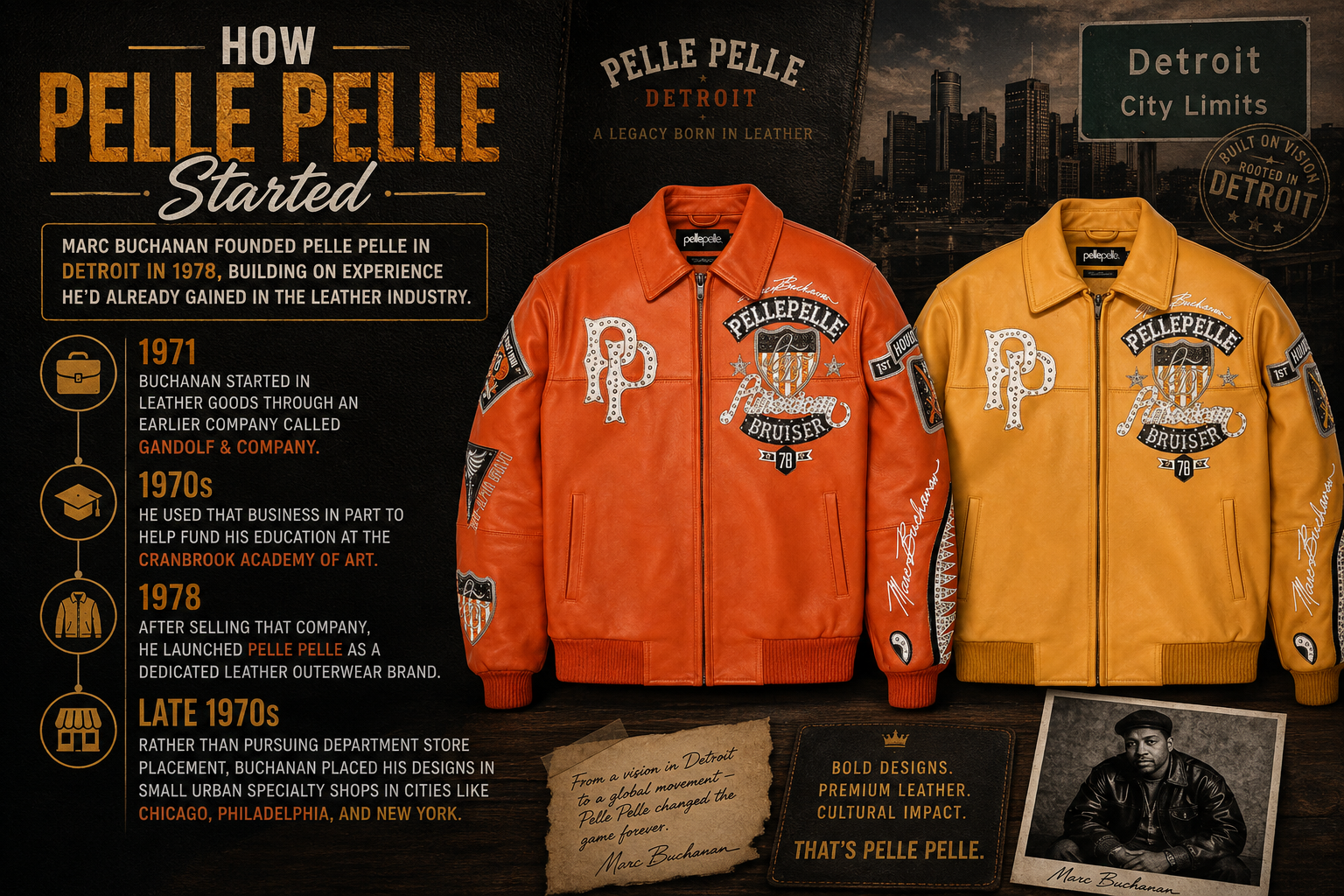
Marc Buchanan founded Pelle Pelle in Detroit in 1978, building on experience he’d already gained in the leather industry.
Key points:
- Buchanan started in leather goods in 1971 through an earlier company called Gandolf & Company.
- He used that earlier business in part to help fund his education at Cranbrook Academy of Art.
- After selling that company, he launched Pelle Pelle as a dedicated leather outerwear brand.
- Rather than pursuing department store placement, Buchanan placed his designs in small urban specialty shops in cities like Chicago, Philadelphia, and New York.
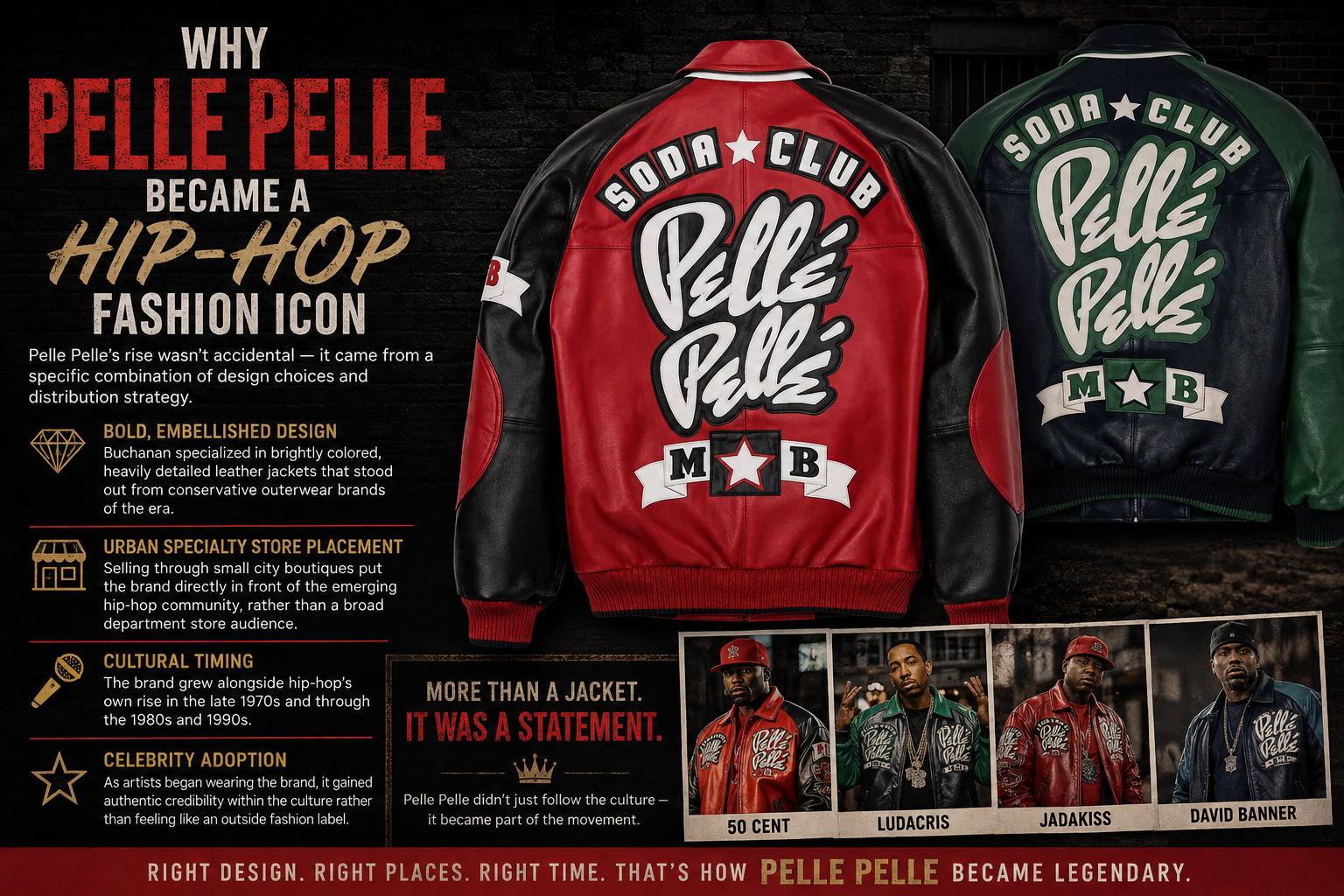
Why Pelle Pelle Became a Hip-Hop Fashion Icon
Pelle Pelle’s rise wasn’t accidental it came from a specific combination of design choices and distribution strategy.
Key factors:
- Bold, embellished design: Buchanan specialized in brightly colored, heavily detailed leather jackets that stood out from conservative outerwear brands of the era.
- Urban specialty store placement: Selling through small city boutiques put the brand directly in front of the emerging hip-hop community, rather than a broad department store audience.
- Cultural timing: The brand grew alongside hip-hop’s own rise in the late 1970s and through the 1980s and 1990s.
- Celebrity adoption: As artists began wearing the brand, it gained authentic credibility within the culture rather than feeling like an outside fashion label.
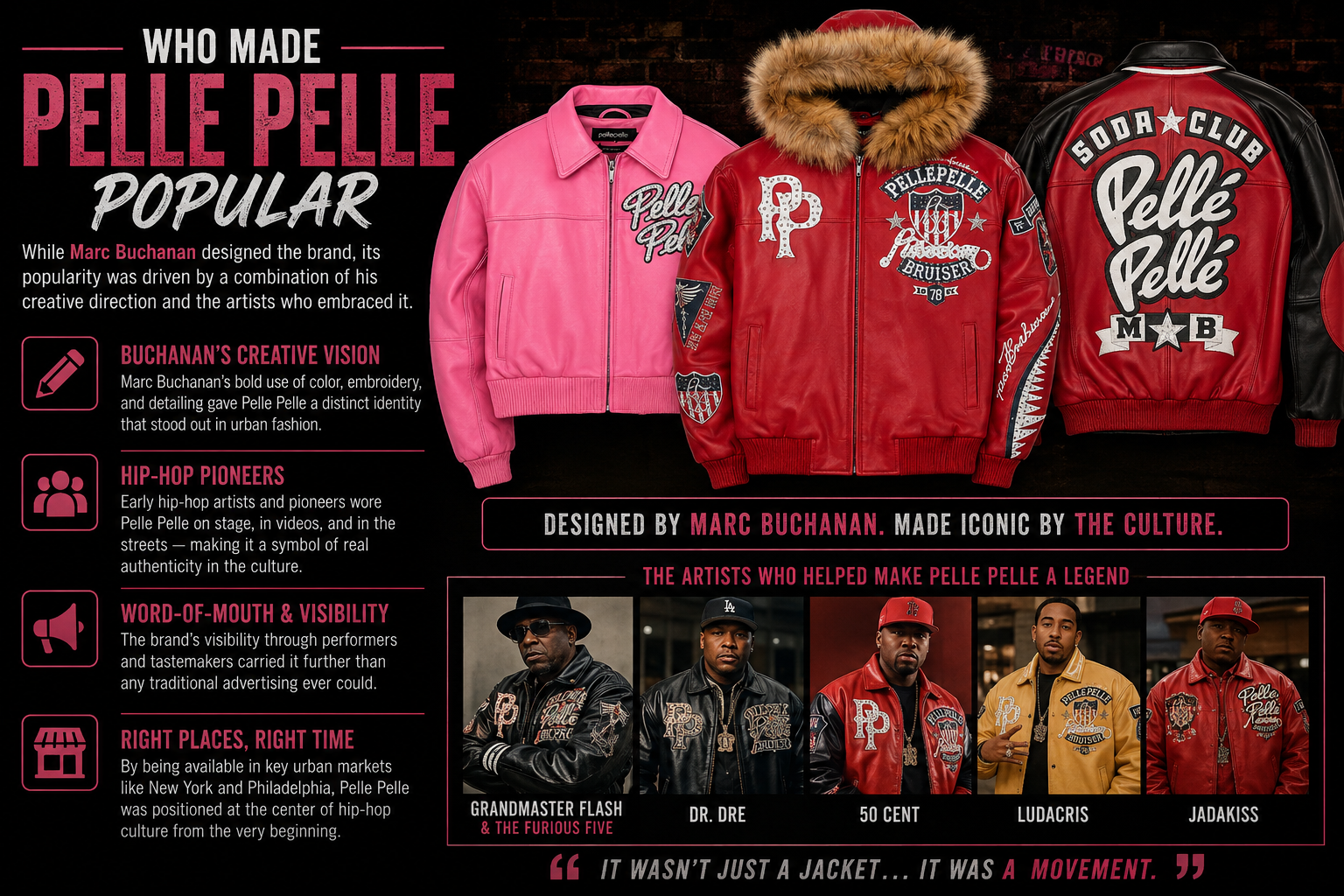
Who Made Pelle Pelle Popular
While Marc Buchanan designed the brand, its popularity was driven by a combination of his creative direction and the artists who embraced it.
Key points:
- Buchanan’s design choices gave the brand a distinct visual identity within urban fashion.
- Early hip-hop pioneers helped establish the brand’s credibility within the culture.
- Word-of-mouth and visibility through performers carried the brand further than traditional advertising could have.
- The brand’s presence in specialty stores in hip-hop hubs like New York and Philadelphia positioned it at the center of the culture from early on.
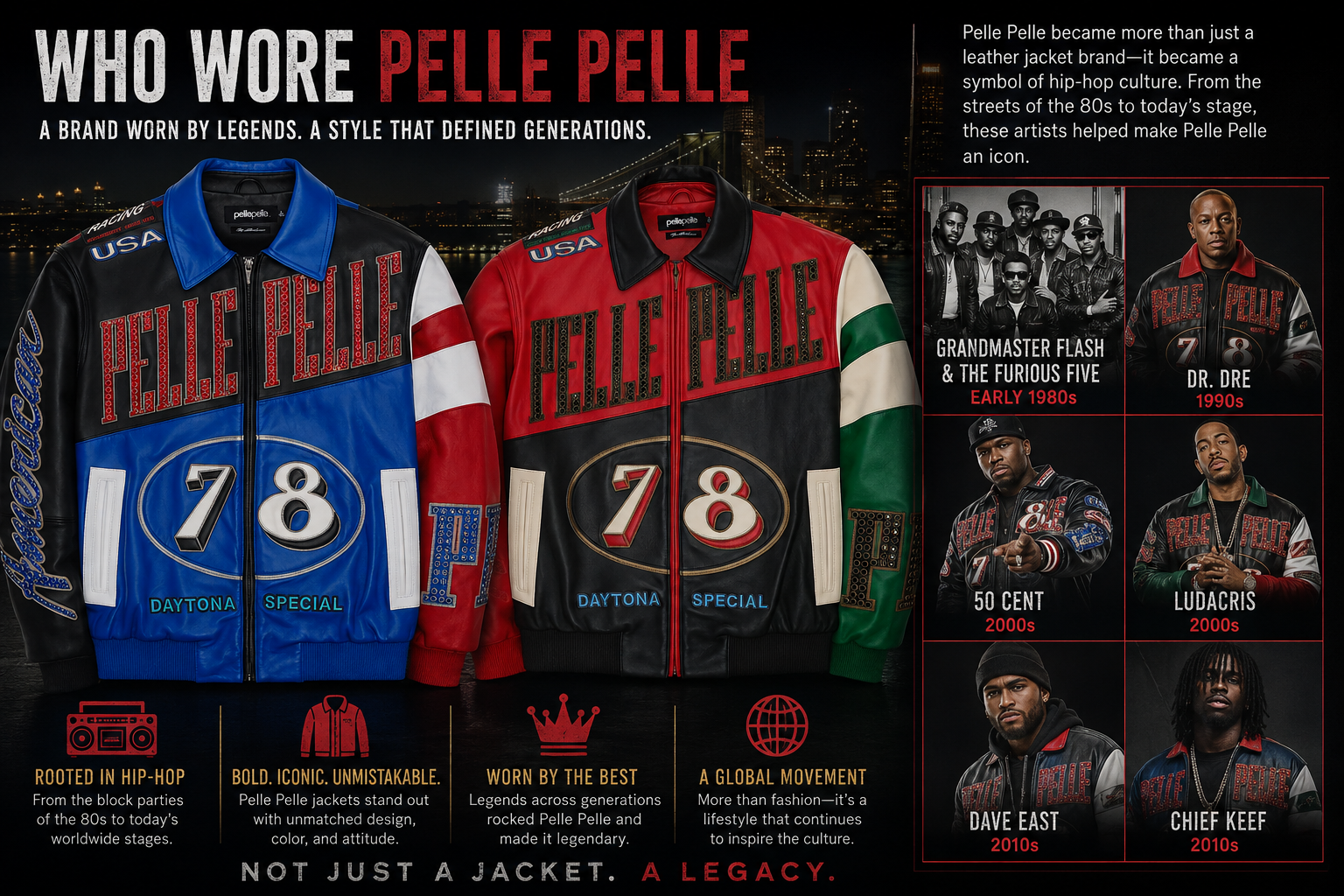
Who Wore Pelle Pelle
Pelle Pelle’s connection to hip-hop is reflected in the range of artists associated with the brand across different eras. Notable names connected to the brand over the years include:
- Grandmaster Flash and the Furious Five, associated with the brand’s early rise.
- Dr. Dre, during hip-hop’s growth through the 1990s.
- 50 Cent and Ludacris, representing the brand’s continued relevance into the 2000s.
- Dave East and Chief Keef, showing the brand’s presence carried into the 2010s.
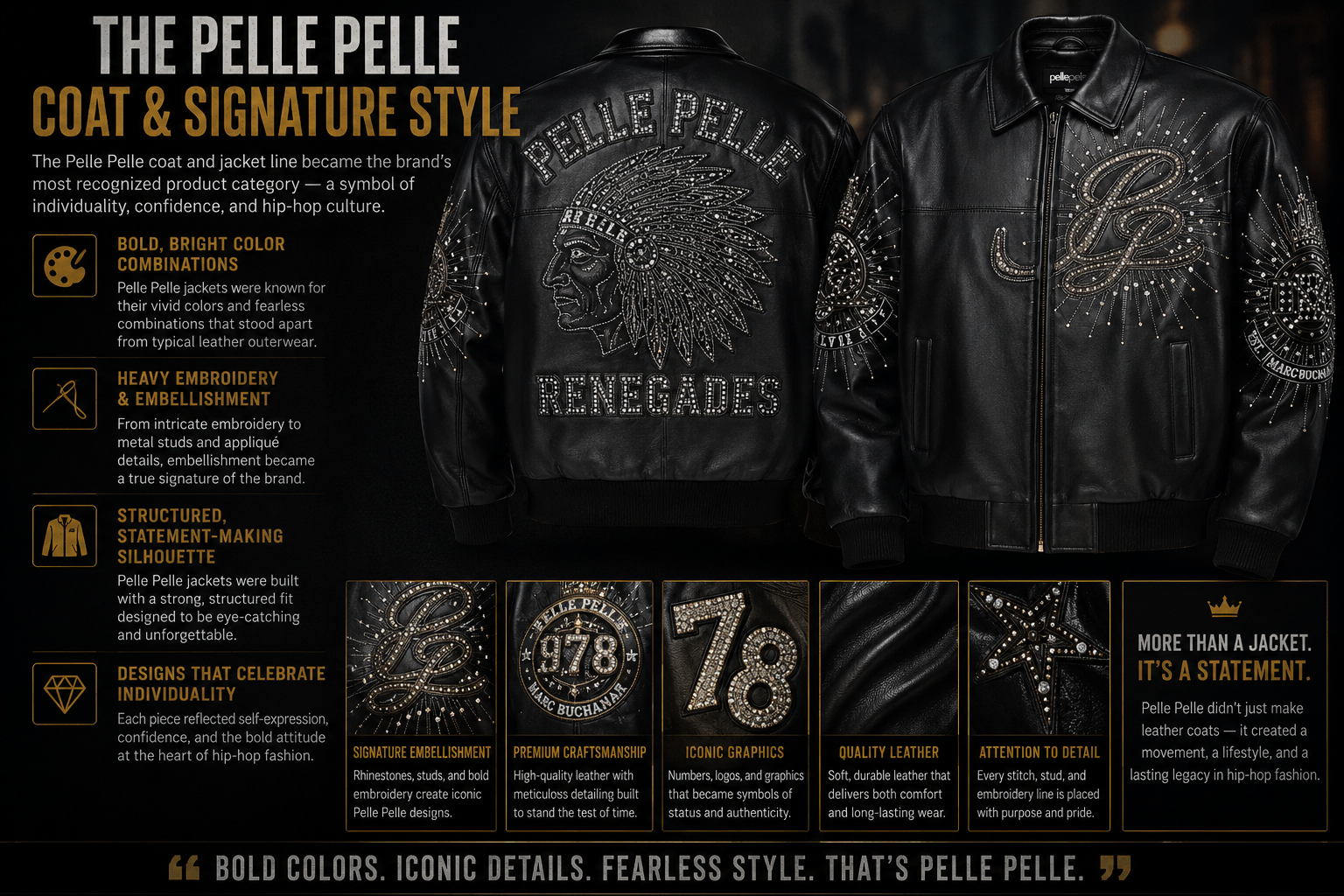
The Pelle Pelle Coat and Signature Style
The Pelle Pelle coat and jacket line became the brand’s most recognized product category.
Key design characteristics:
- Bright, bold color combinations that stood apart from typical leather outerwear.
- Heavy embroidery and embellishment as a signature design element.
- A structured, statement-making silhouette meant to be visually distinctive.
- Designs that leaned into individuality and self-expression, aligning closely with hip-hop fashion values.
What Happened to Pelle Pelle
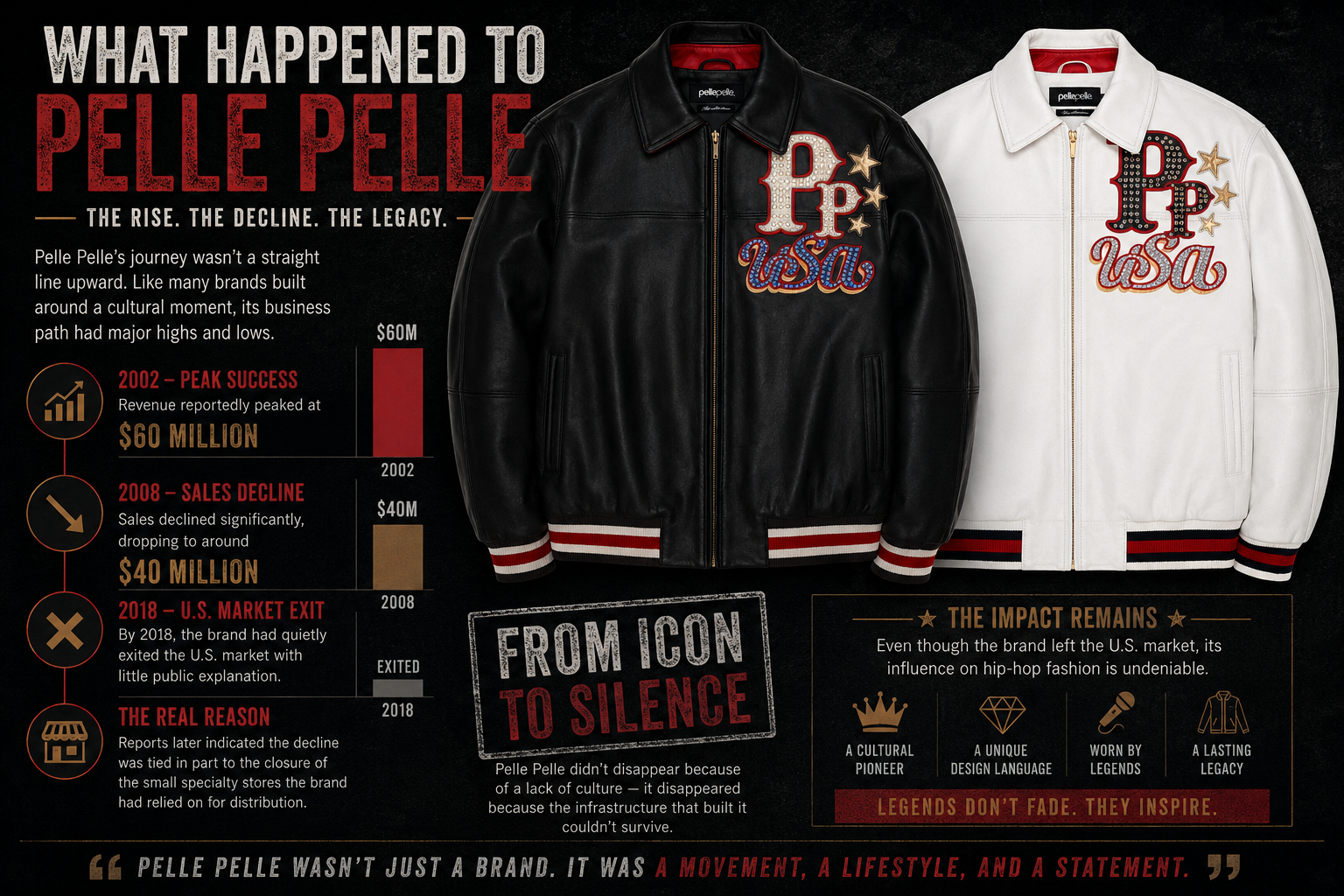
Like many brands built around a specific cultural moment, Pelle Pelle’s business path wasn’t a straight line upward.
Key points:
- The brand’s revenue reportedly peaked around $60 million in 2002.
- Sales declined significantly in the years that followed, dropping to around $40 million by 2008.
- By 2018, the brand had quietly exited the U.S. market with little public explanation.
- Reports later indicated the decline was tied in part to the closure of the small specialty stores the brand had relied on for distribution.
Who Owns Pelle Pelle Today
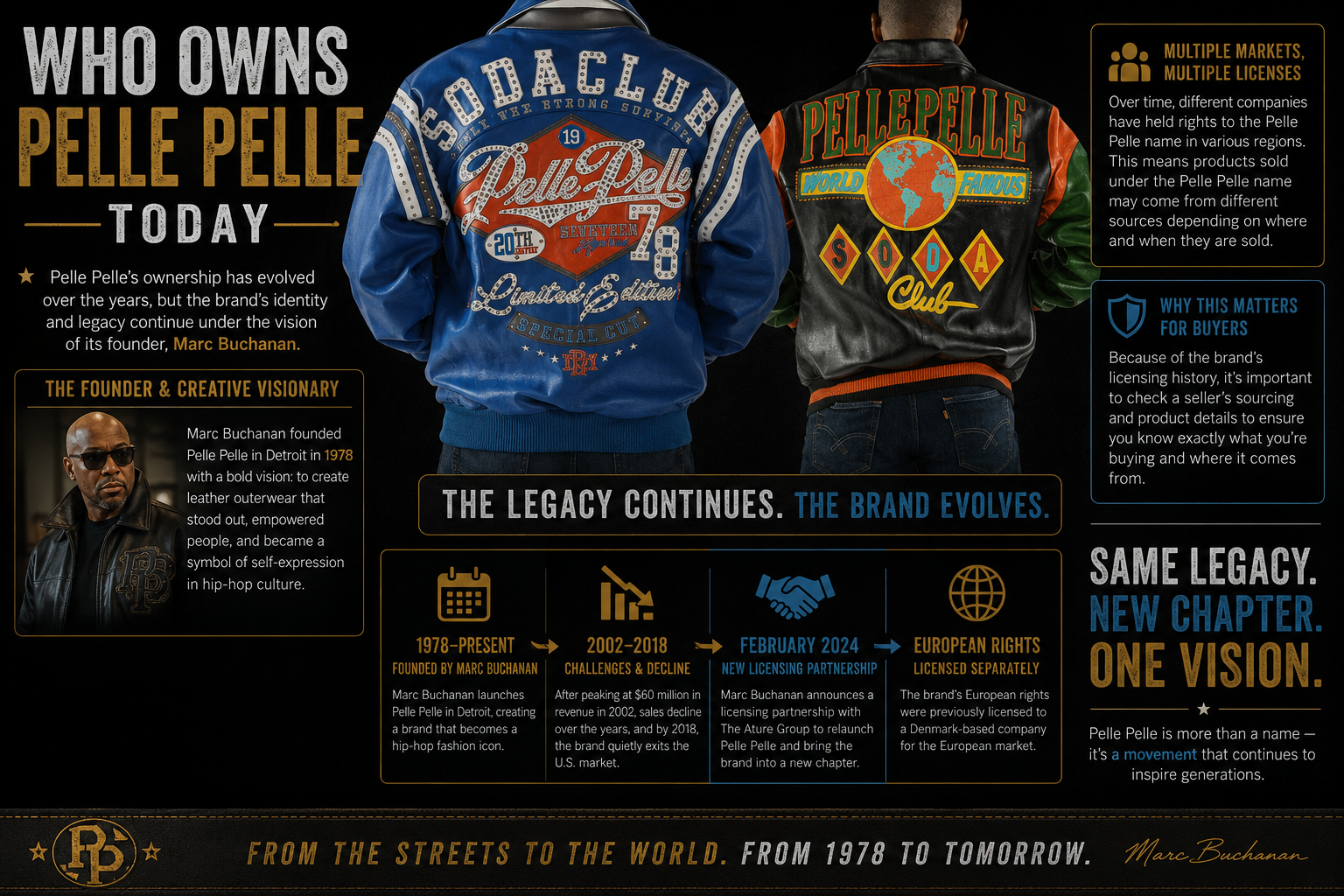
Pelle Pelle’s ownership and licensing structure has changed over the years, which explains some of the confusion around the brand today.
Key points:
- Marc Buchanan remains the brand’s founder and creative figure behind its identity.
- In February 2024, Buchanan announced a licensing partnership with The Ature Group to relaunch Pelle Pelle.
- Separately, the brand’s European rights were previously licensed to a Denmark-based company for the European market.
- Because of this licensing history, products sold under the Pelle Pelle name may come from different sources depending on region and time period, which is why checking a specific seller’s sourcing is worthwhile before buying.
Pelle Pelle Timeline
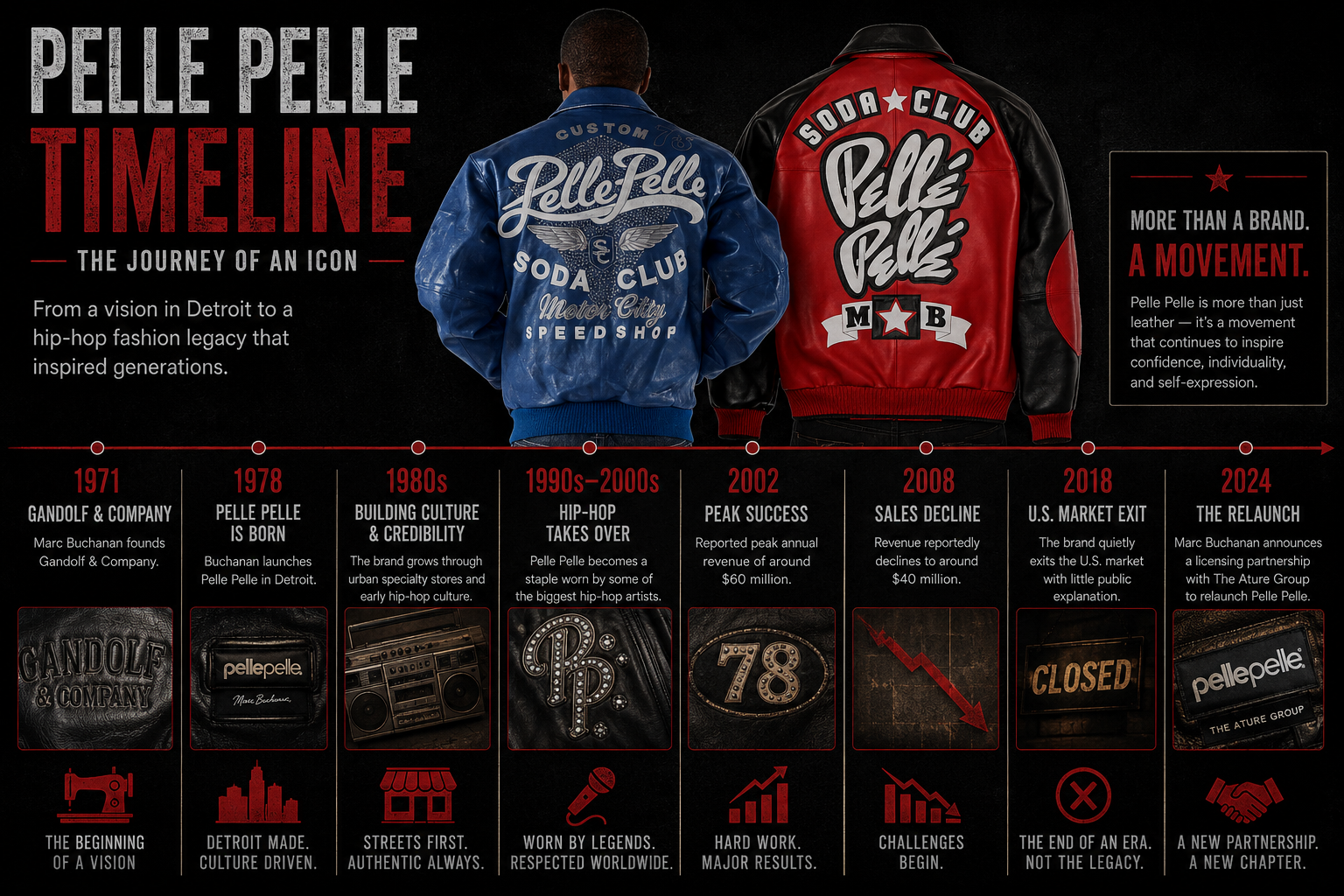
A general timeline of the brand’s major moments:
- 1971: Marc Buchanan founds Gandolf & Company.
- 1978: Buchanan launches Pelle Pelle in Detroit.
- 1980s: The brand builds credibility through urban specialty stores and early hip-hop culture.
- 1990s–2000s: Pelle Pelle becomes strongly associated with major hip-hop artists.
- 2002: Reported peak annual revenue of around $60 million.
- 2008: Revenue reportedly declines to around $40 million.
- 2018: The brand quietly exits the U.S. market.
- 2024: Buchanan announces a licensing partnership with The Ature Group to relaunch the brand.
Comparison Table Pelle Pelle Then vs. Now
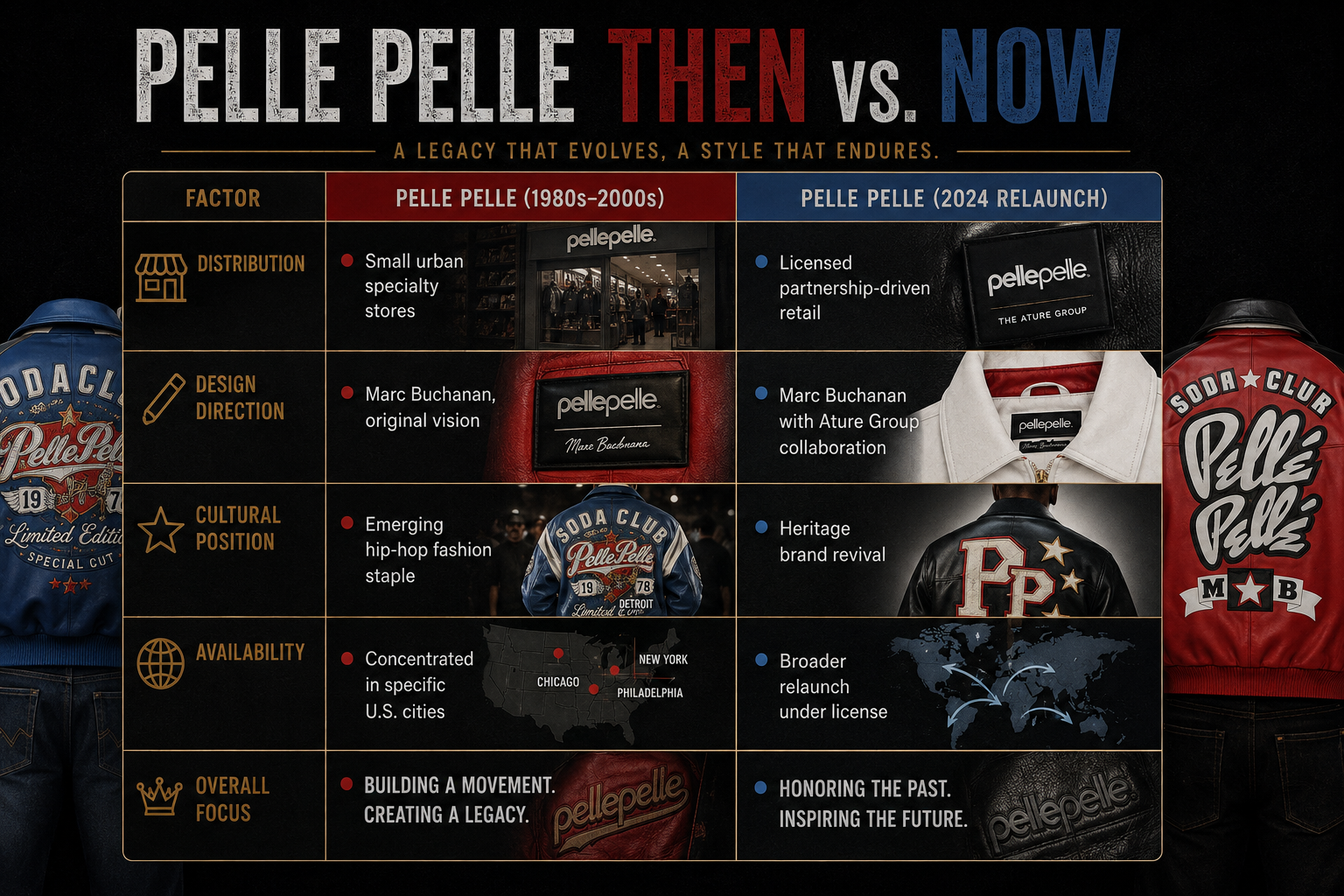
| Factor | Pelle Pelle (1980s–2000s) | Pelle Pelle (2024 Relaunch) |
|---|---|---|
| Distribution | Small urban specialty stores | Licensed partnership-driven retail |
| Design Direction | Marc Buchanan, original vision | Marc Buchanan with Ature Group collaboration |
| Cultural Position | Emerging hip-hop fashion staple | Heritage brand revival |
| Availability | Concentrated in specific U.S. cities | Broader relaunch under license |
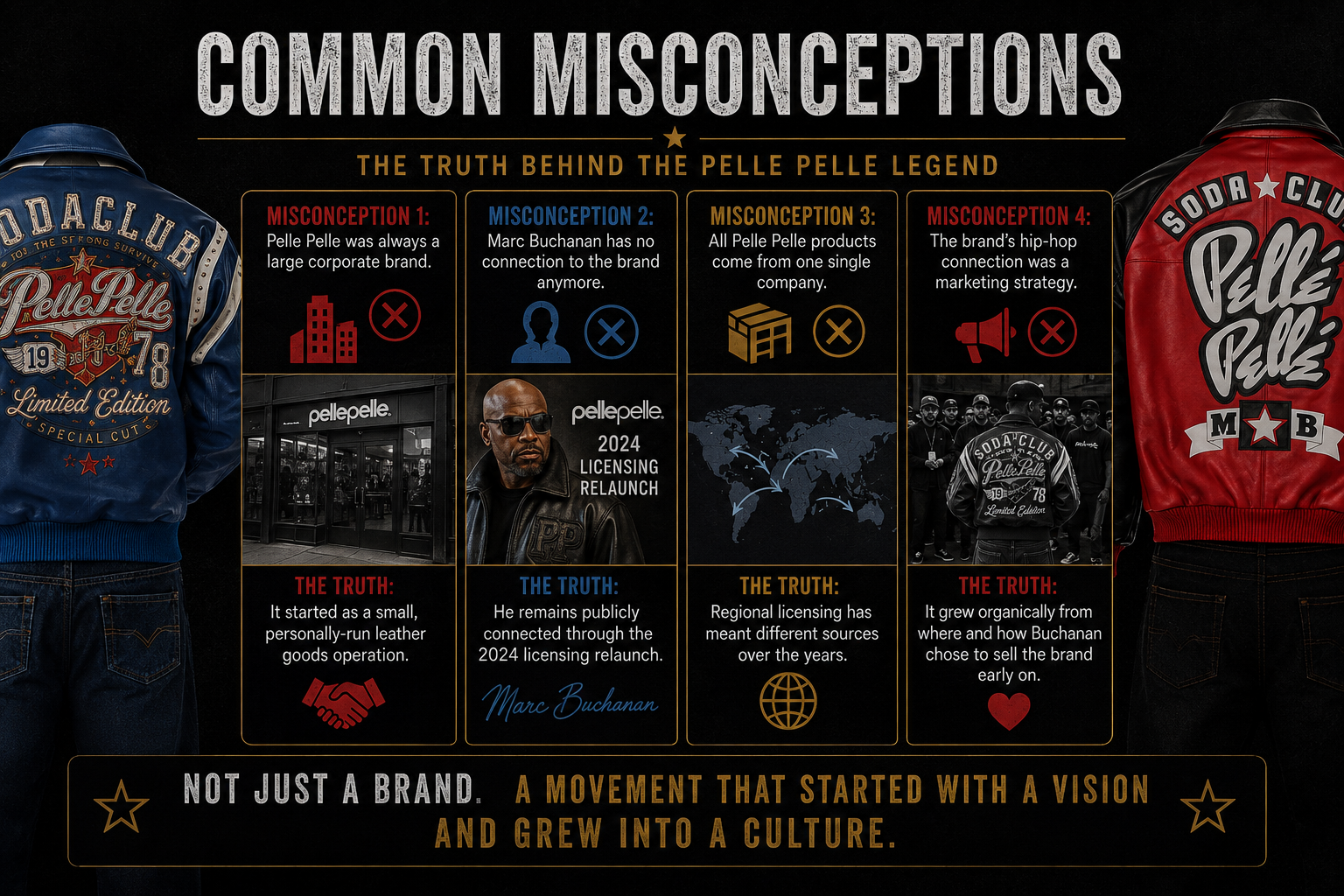
Common Misconceptions
A few misunderstandings come up often when people research this brand’s history:
- Misconception 1: Pelle Pelle was always a large corporate brand, it started as a small, personally-run leather goods operation.
- Misconception 2: Marc Buchanan has no connection to the brand anymore, he remains publicly connected through the 2024 licensing relaunch.
- Misconception 3: All Pelle Pelle products come from one single company, regional licensing has meant different sources over the years.
- Misconception 4: The brand’s hip-hop connection was a marketing strategy, it grew organically from where and how Buchanan chose to sell the brand early on.
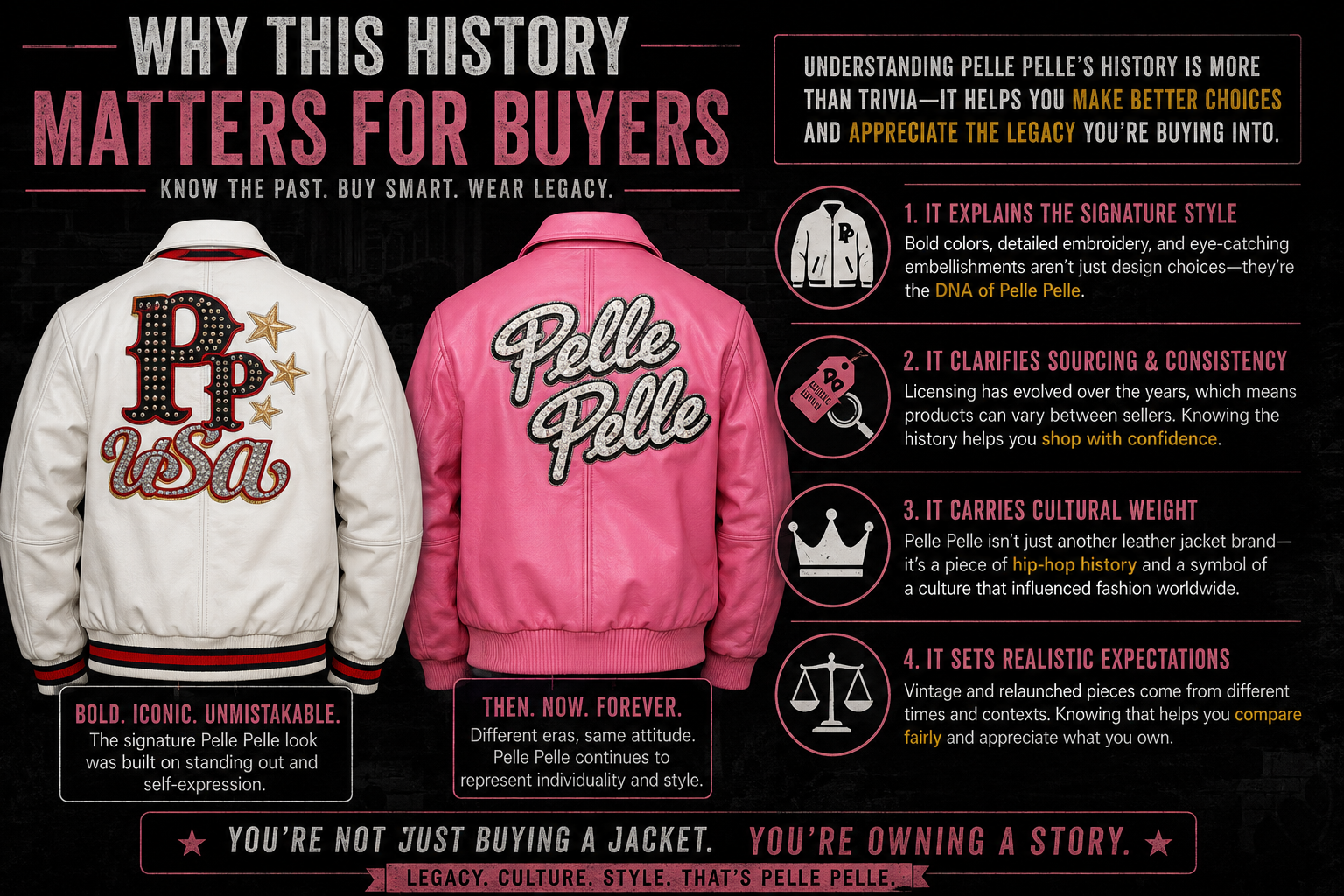
Why This History Matters for Buyers
Understanding this background is useful beyond trivia if you’re shopping for a Pelle Pelle-style jacket today:
- It explains why bold color, embellishment, and embroidery are considered signature Pelle Pelle traits.
- It clarifies why sourcing and product consistency can vary between sellers given the brand’s licensing history.
- It provides context for why the brand carries cultural weight beyond being just another leather jacket label.
- It helps set realistic expectations when comparing vintage pieces to newer, relaunched products.
FAQs
Why did Pelle Pelle become a hip-hop fashion icon?
Founder Marc Buchanan designed bold, embellished leather jackets and sold them through small urban specialty stores, putting the brand directly in front of the emerging hip-hop community during the 1980s and 1990s.
What does “Pelle Pelle” mean?
It comes from the Italian word for leather, chosen by founder Marc Buchanan to reflect the brand’s original focus on leather craftsmanship.
Who made Pelle Pelle popular?
Marc Buchanan’s design direction, combined with adoption by hip-hop artists across multiple eras, drove the brand’s popularity within the culture.
Who wore Pelle Pelle?
Artists associated with the brand over the years include Grandmaster Flash and the Furious Five, Dr. Dre, 50 Cent, Ludacris, Dave East, and Chief Keef.
Who owns Pelle Pelle now?
Marc Buchanan, the brand’s founder, partnered with The Ature Group under a licensing agreement announced in February 2024 to relaunch the brand.
What happened to Pelle Pelle?
The brand’s revenue declined significantly after 2002, and it quietly exited the U.S. market by 2018 before Buchanan announced a relaunch through licensing in 2024.
What is a Pelle Pelle coat known for?
Pelle Pelle coats and jackets are known for bold color combinations, heavy embroidery, and a structured, statement-making silhouette.
Is Pelle Pelle still being made today?
Yes, the brand has seen renewed activity through the 2024 licensing partnership between Marc Buchanan and The Ature Group.
Where was Pelle Pelle originally sold?
The brand was originally sold through small urban specialty stores in cities like Chicago, Philadelphia, and New York, rather than large department stores.
Is the Pelle Pelle sold in Europe the same as the U.S. brand?
Historically, the brand’s European rights were licensed separately to a Denmark-based company, meaning European and U.S. products haven’t always come from the same source.
Explore Leather Jackets Inspired by This Legacy
If you’re drawn to the bold, detailed style that made Pelle Pelle a hip-hop fashion icon, we can help you find a leather jacket that captures that same spirit. Reach out with questions about styles, sizing, or craftsmanship, and we’ll point you toward the right piece for your collection.
