


Pelle Pelle jackets are primarily built around genuine leather, typically full-grain or top-grain hide, complemented by wool blends, synthetic alternatives for certain styles, detailed embroidery, and quality hardware like metal zippers and rivets. Lining materials such as cupro or high-denier polyester also play a role in comfort and durability, even though they're less visible than the exterior. Whether you're evaluating a new jacket or a vintage piece, checking leather grade, stitching, hardware, and lining quality gives you a much clearer picture of what you're actually buying than relying on branding or price alone.
Introduction
The materials behind a Pelle Pelle jacket are a big part of why the brand has held its reputation for decades, but most buyers never get a clear breakdown of what actually goes into one. From the leather grade to the lining and hardware, each component affects how the jacket looks, feels, and holds up over time. This guide covers exactly what materials Pelle Pelle uses, how vintage pieces compare to current production, and what to look for when evaluating quality.
Featured Snippet Answer
Pelle Pelle jackets are primarily made from genuine leather, typically full-grain or top-grain hide, known for durability and a natural patina that develops with age. The brand also uses wool blends and synthetic leather alternatives for certain styles. Jackets typically feature detailed embroidery, embellishments like studs, and quality hardware such as metal zippers and rivets.
Why This Matters
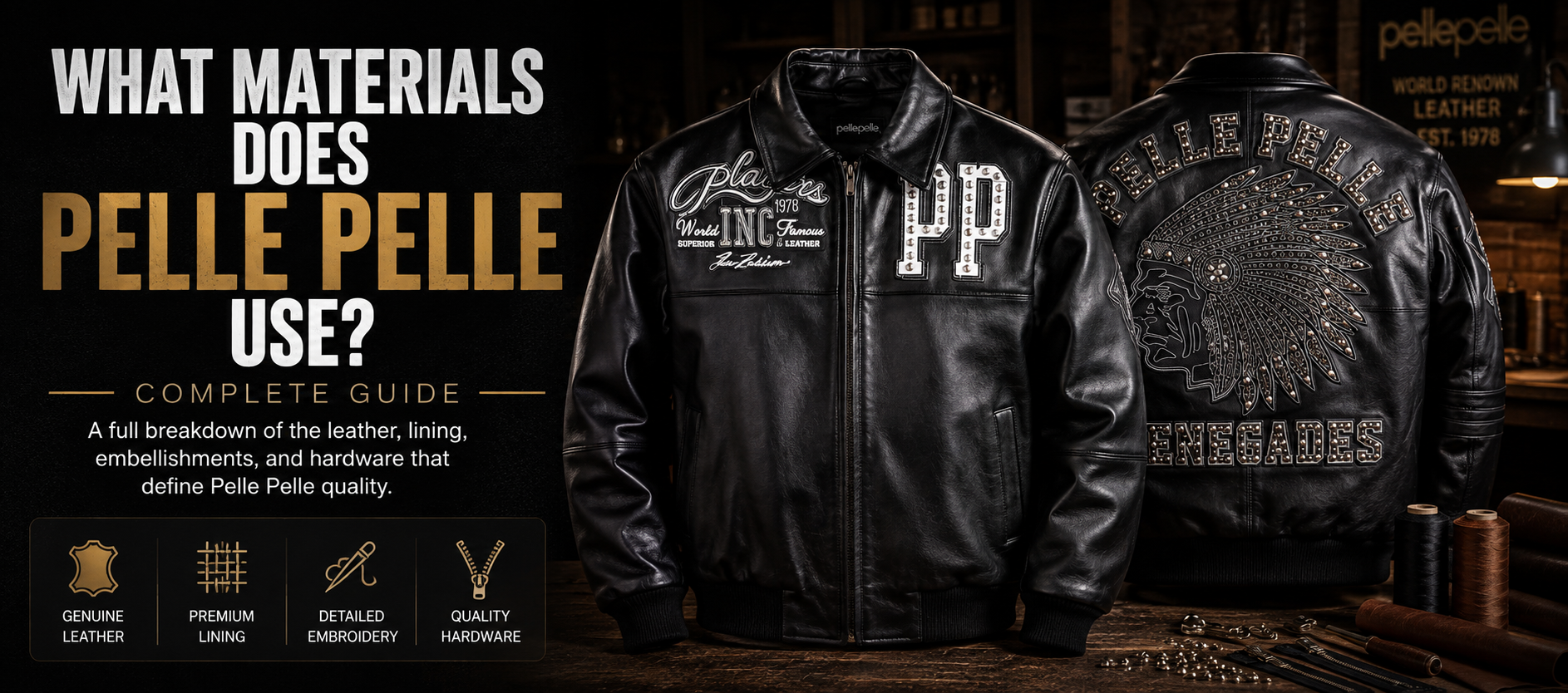
Understanding the materials behind a jacket helps you evaluate whether a specific piece is worth its price, and helps you spot the difference between a well-made jacket and a lower-quality imitation.
Here’s what’s at stake:
- Leather grade directly affects how long a jacket lasts and how it ages over time.
- Lower-quality synthetic materials can look similar in photos but perform very differently in real wear.
- Understanding embellishment materials helps you judge whether detailing is well-constructed or likely to peel and fray.
- Knowing what to look for helps you make a more confident purchase, whether buying new or vintage.
The Core Material: Genuine Leather
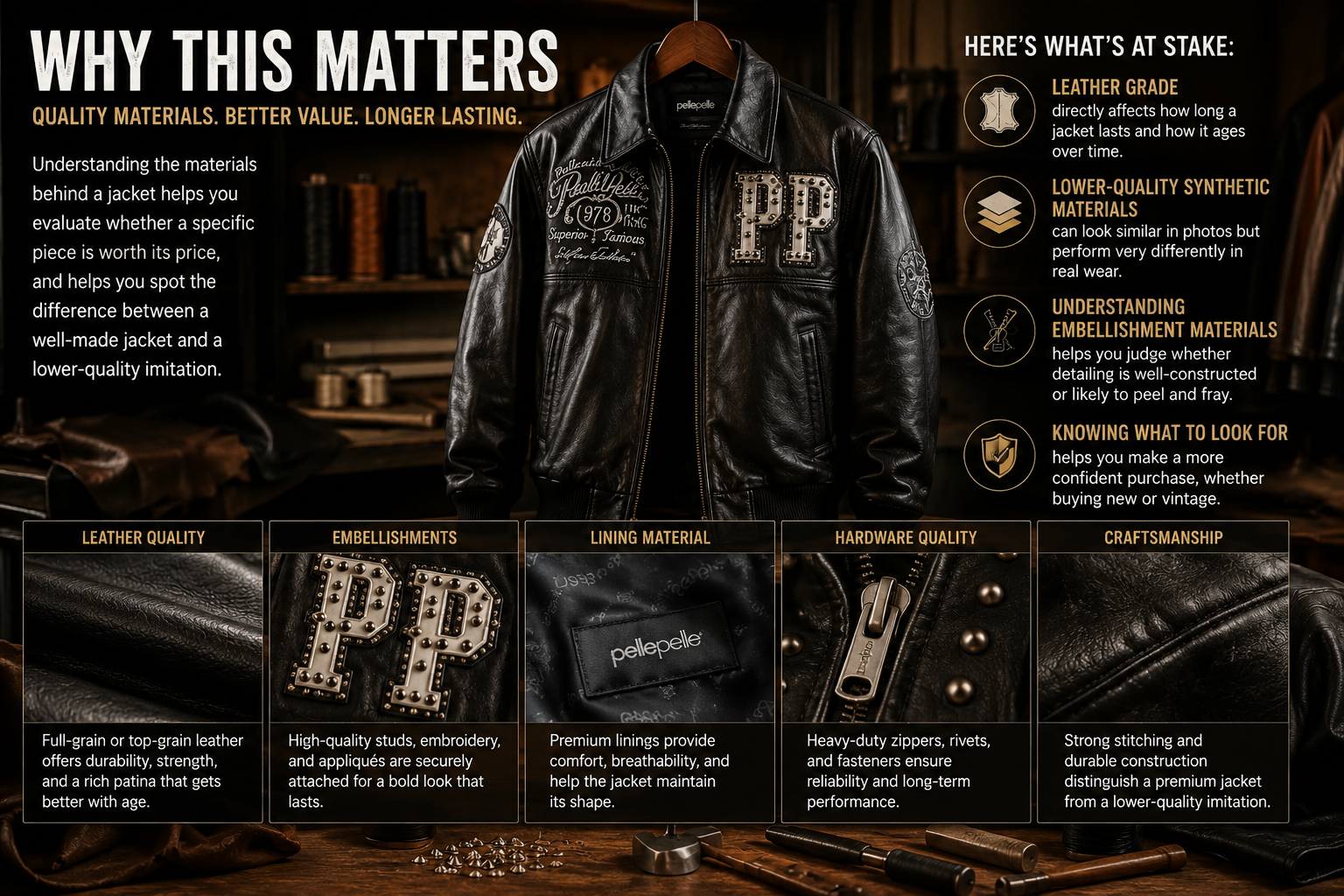
Genuine leather is the foundational material most associated with Pelle Pelle jackets, chosen for its durability, feel, and how it develops character over time.
Key points:
- Genuine leather comes from animal hide that’s been tanned and treated for use in outerwear.
- It’s more durable and long-lasting than synthetic alternatives when properly cared for.
- Leather naturally develops a patina, meaning it softens and gains subtle color variation with age and wear.
- This is the material most associated with the brand’s premium positioning and long-term value.
Leather Grades Used in Pelle Pelle Jackets
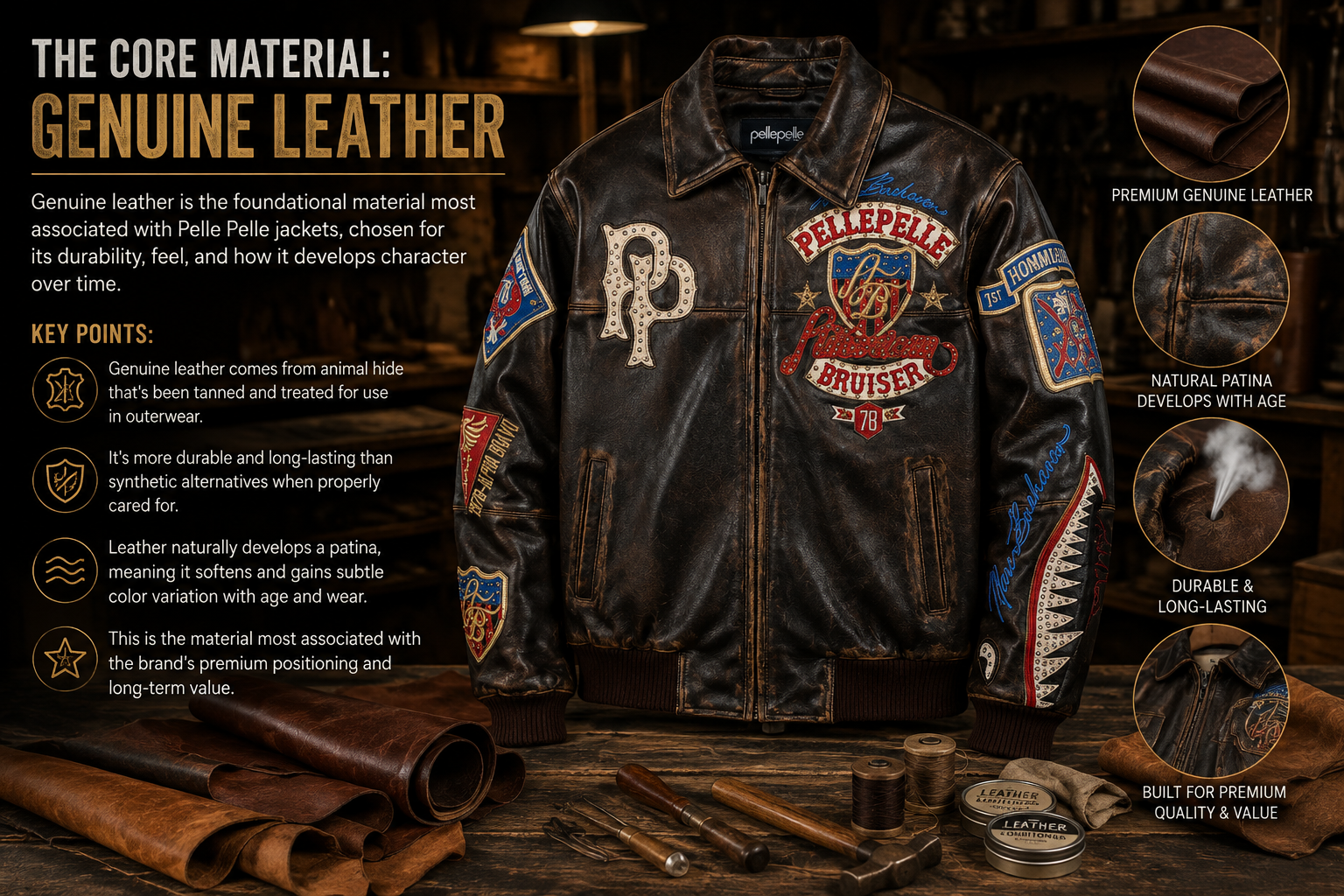
Not all leather is graded the same, and the grade used affects both quality and price.
Key distinctions:
- Full-grain leather retains the hide’s natural surface and texture, considered the highest quality grade.
- Top-grain leather is sanded and refined slightly more than full-grain, offering a smoother, more uniform finish while remaining a high-quality option.
- Both grades are commonly associated with premium Pelle Pelle production, as opposed to lower-grade corrected-grain or bonded leather sometimes used in budget outerwear.
- Higher leather grades generally command a higher price but offer better durability and aging characteristics.
Wool and Synthetic Material Options
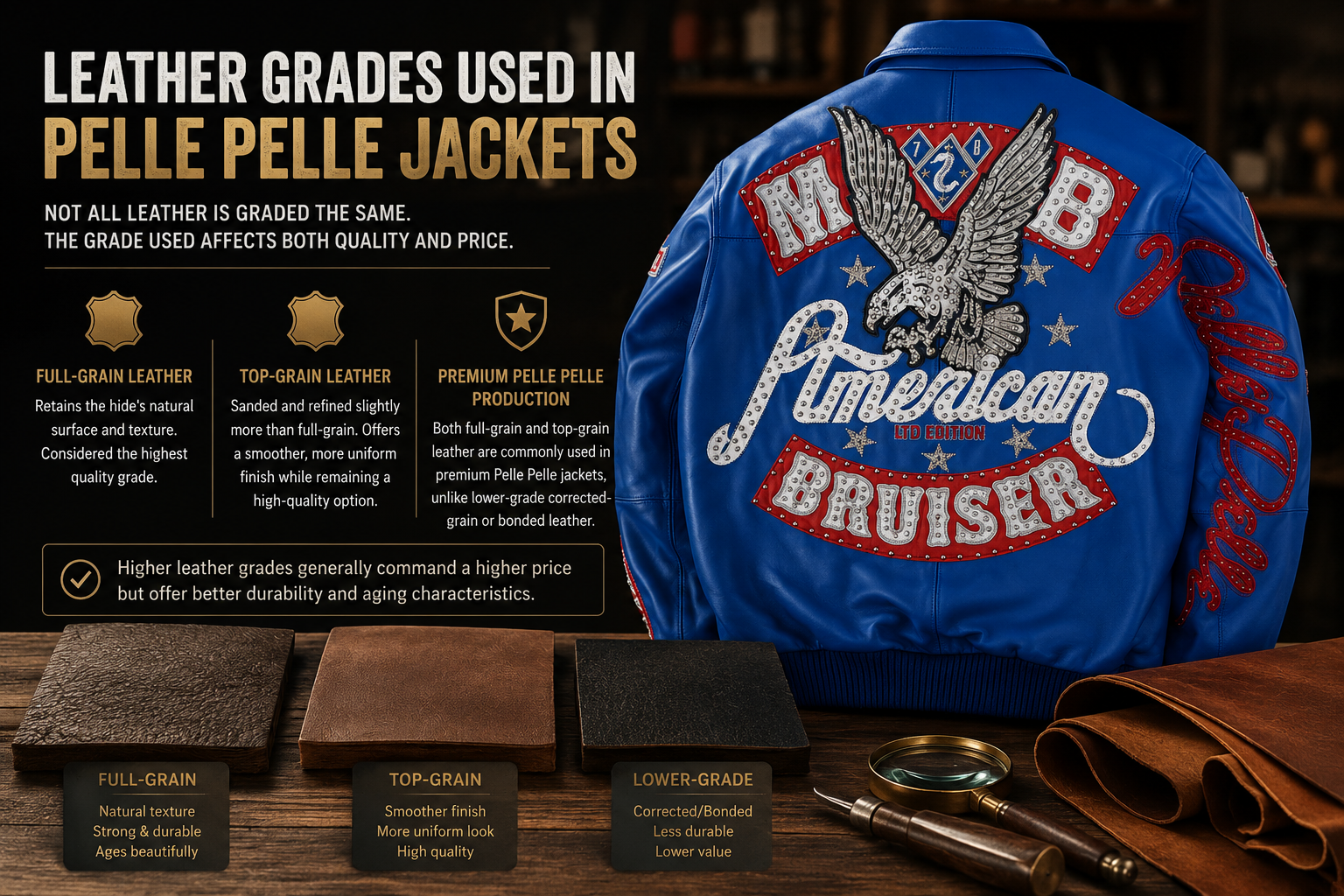
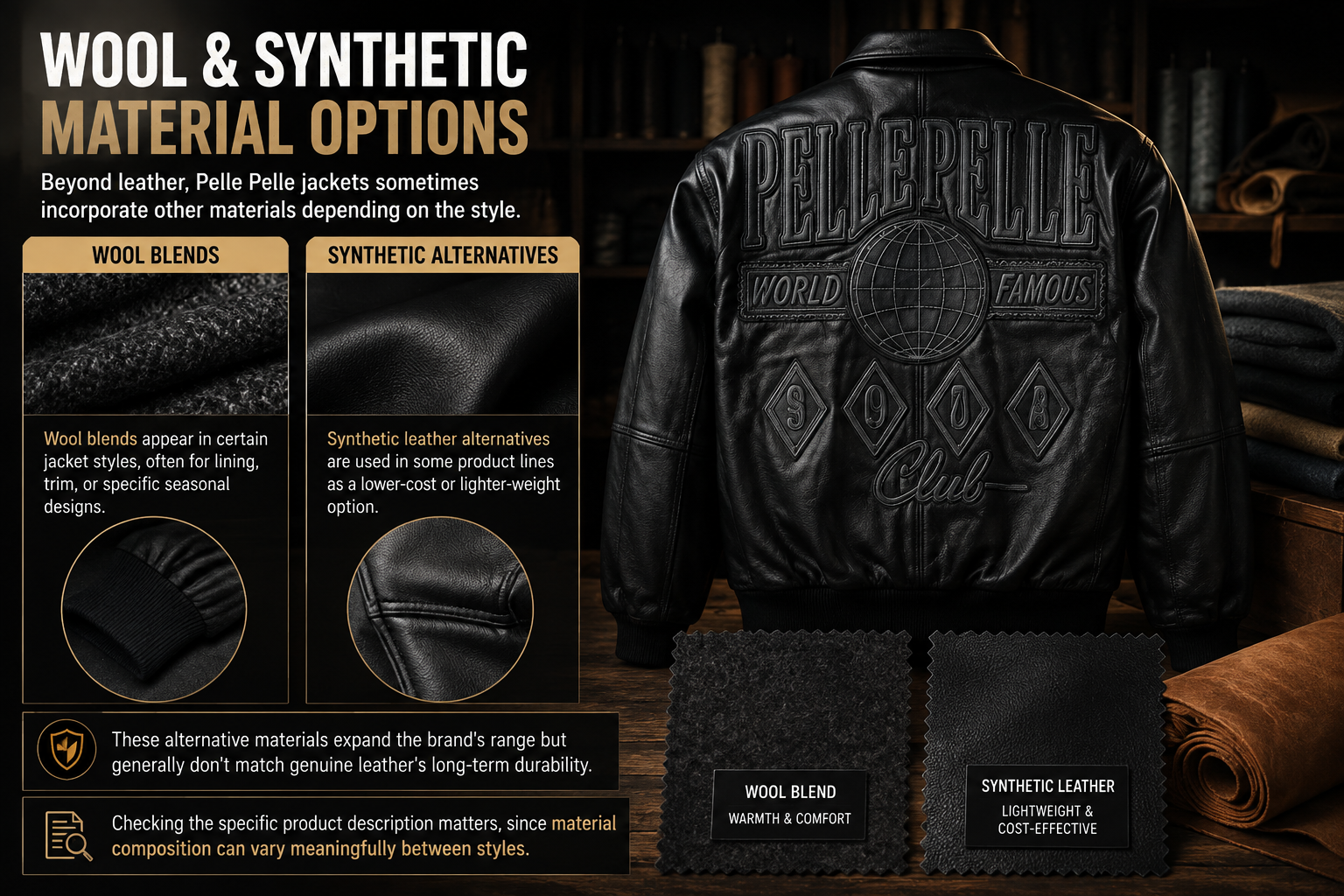
Beyond leather, Pelle Pelle jackets sometimes incorporate other materials depending on the style.
Key points:
- Wool blends appear in certain jacket styles, often for lining, trim, or specific seasonal designs.
- Synthetic leather alternatives are used in some product lines as a lower-cost or lighter-weight option.
- These alternative materials expand the brand’s range but generally don’t match genuine leather’s long-term durability.
- Checking the specific product description matters, since material composition can vary meaningfully between styles.
Lining Materials
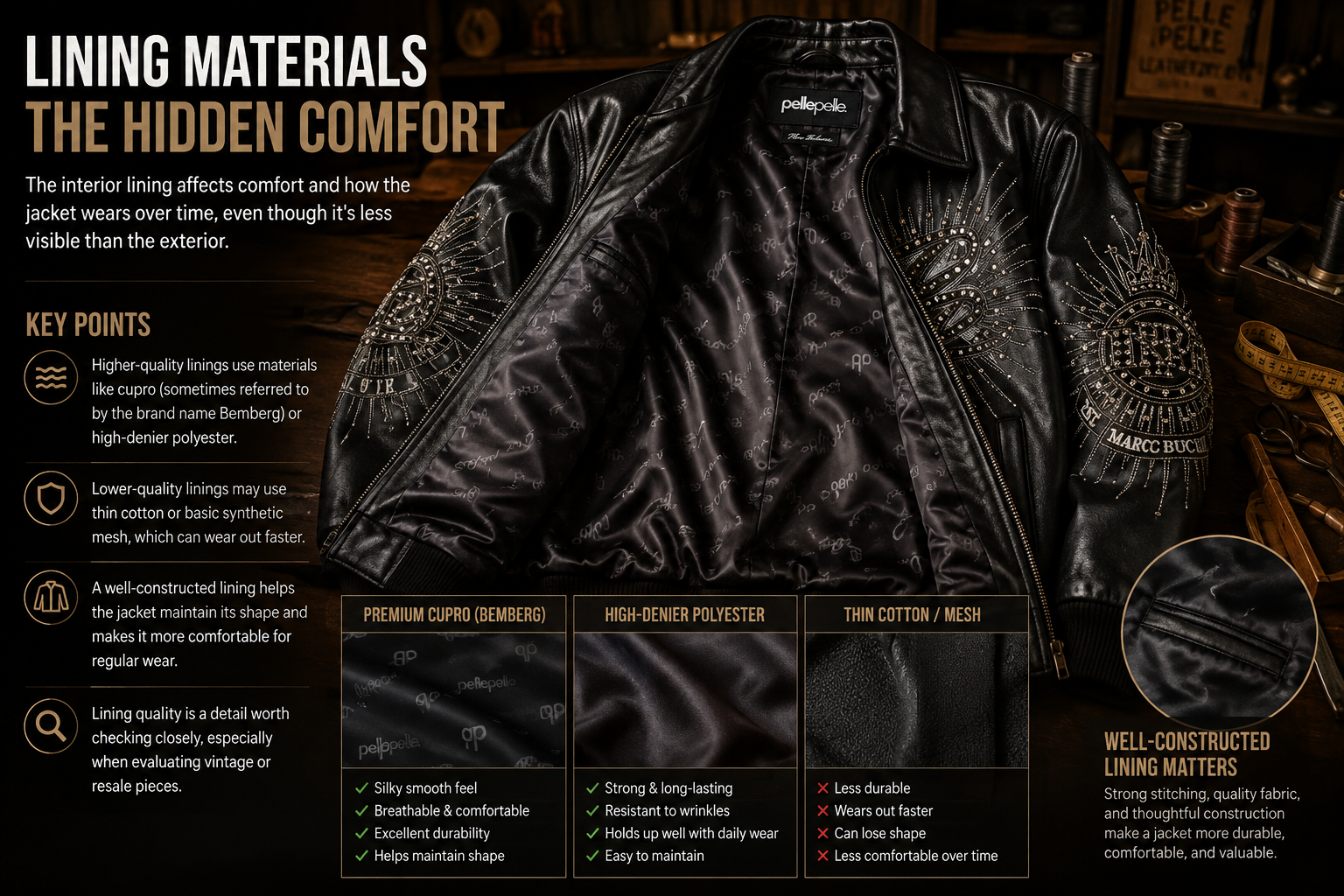
The interior lining affects comfort and how the jacket wears over time, even though it’s less visible than the exterior.
Key points:
- Higher-quality linings use materials like cupro (sometimes referred to by the brand name Bemberg) or high-denier polyester.
- Lower-quality linings may use thin cotton or basic synthetic mesh, which can wear out faster.
- A well-constructed lining helps the jacket maintain its shape and makes it more comfortable for regular wear.
- Lining quality is a detail worth checking closely, especially when evaluating vintage or resale pieces.
Embellishments and Embroidery
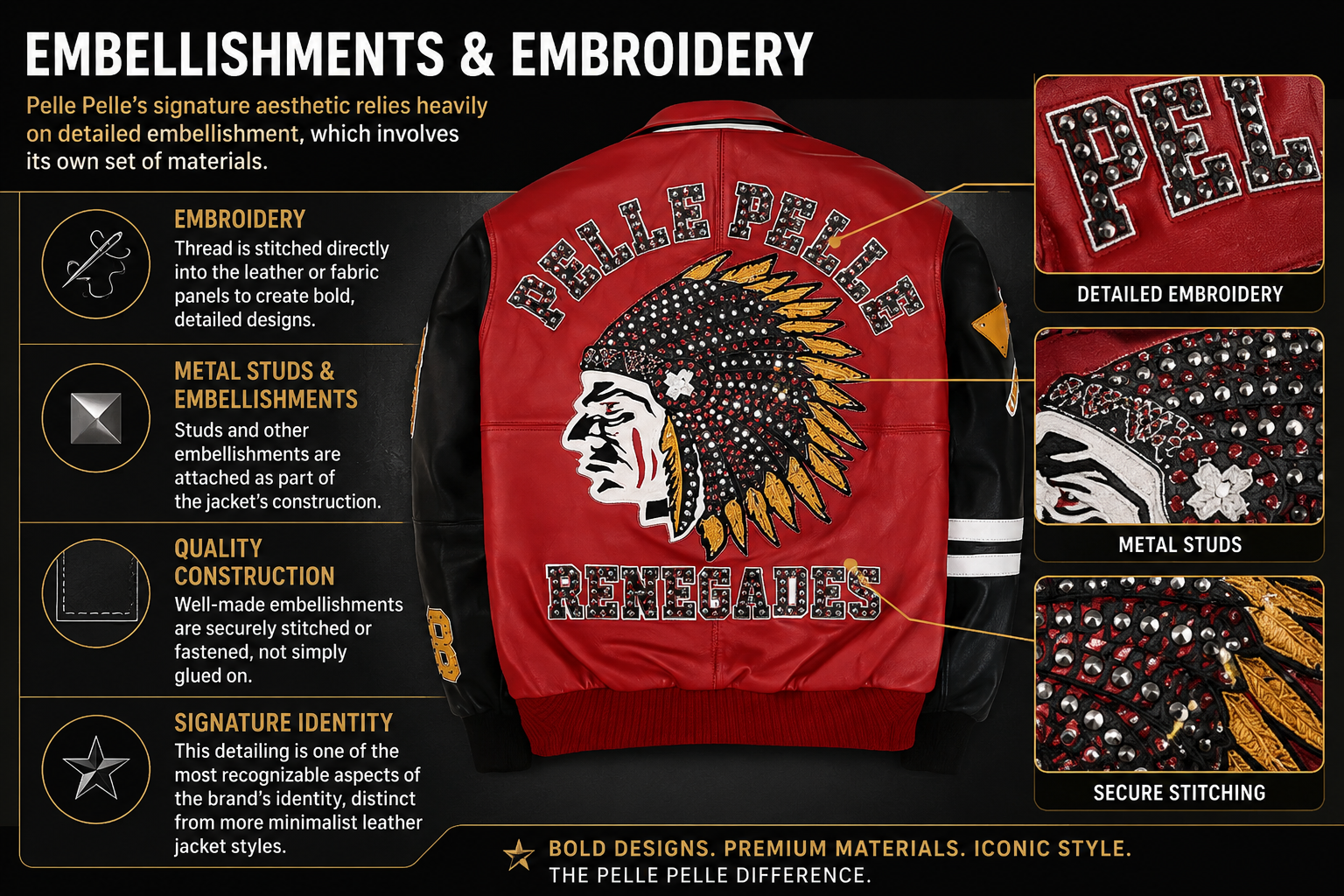
Pelle Pelle’s signature aesthetic relies heavily on detailed embellishment, which involves its own set of materials.
Key points:
- Embroidery uses thread stitched directly into the leather or fabric panels to create the brand’s bold, detailed designs.
- Metal studs and other embellishments are attached as part of the jacket’s construction.
- Well-made embellishments are securely stitched or fastened, not simply glued on.
- This detailing is one of the most recognizable aspects of the brand’s identity, distinct from more minimalist leather jacket styles.
Hardware: Zippers, Rivets, and Fasteners
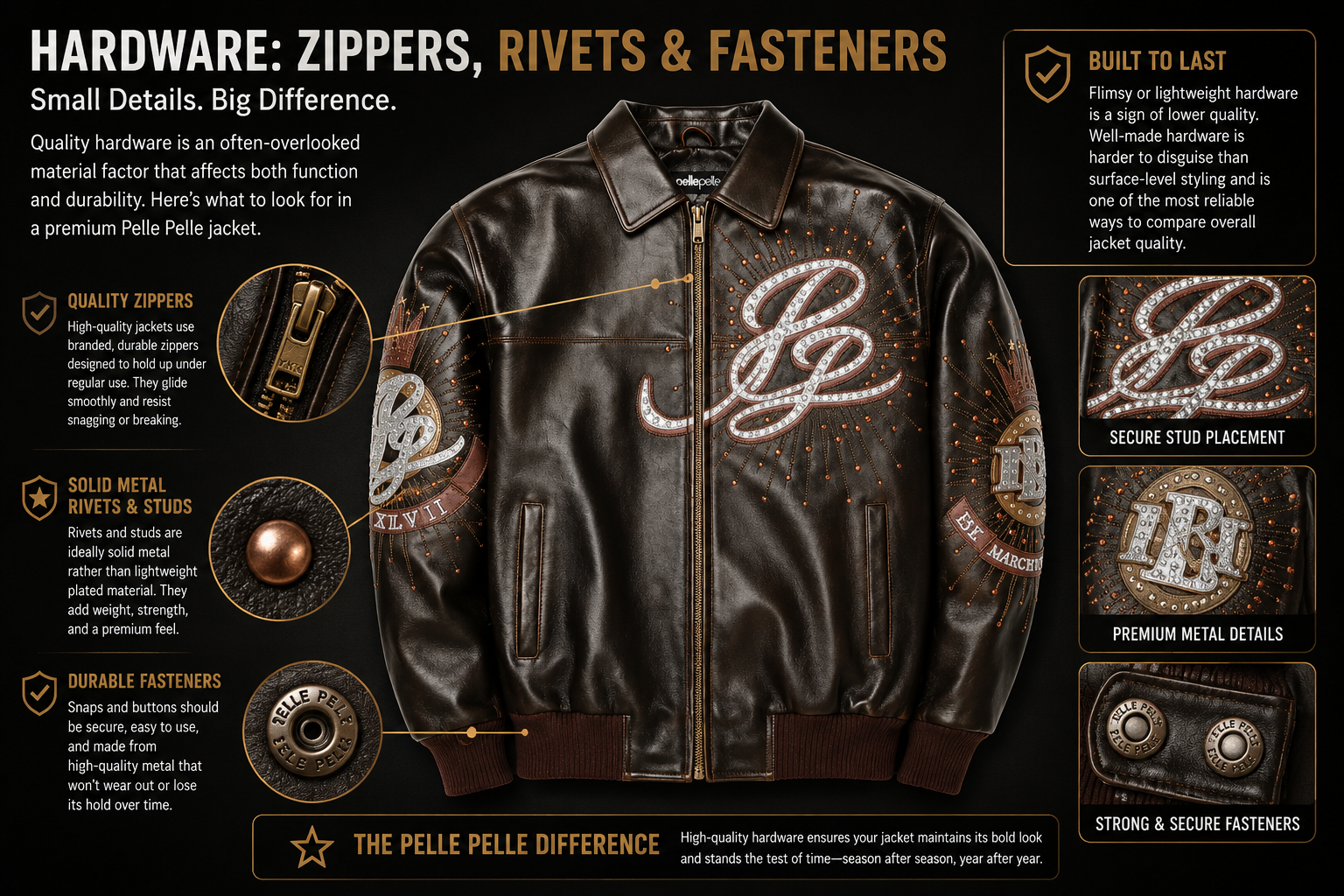
Hardware quality is an often-overlooked material factor that affects both function and durability.
Key points:
- Quality zippers use branded, durable components designed to hold up under regular use.
- Rivets and studs are ideally solid metal rather than lightweight plated material.
- Hardware that feels flimsy or shows wear quickly is often a sign of lower overall construction quality.
- This detail is one of the more reliable ways to compare quality between different jackets, since hardware is harder to disguise than surface-level styling.
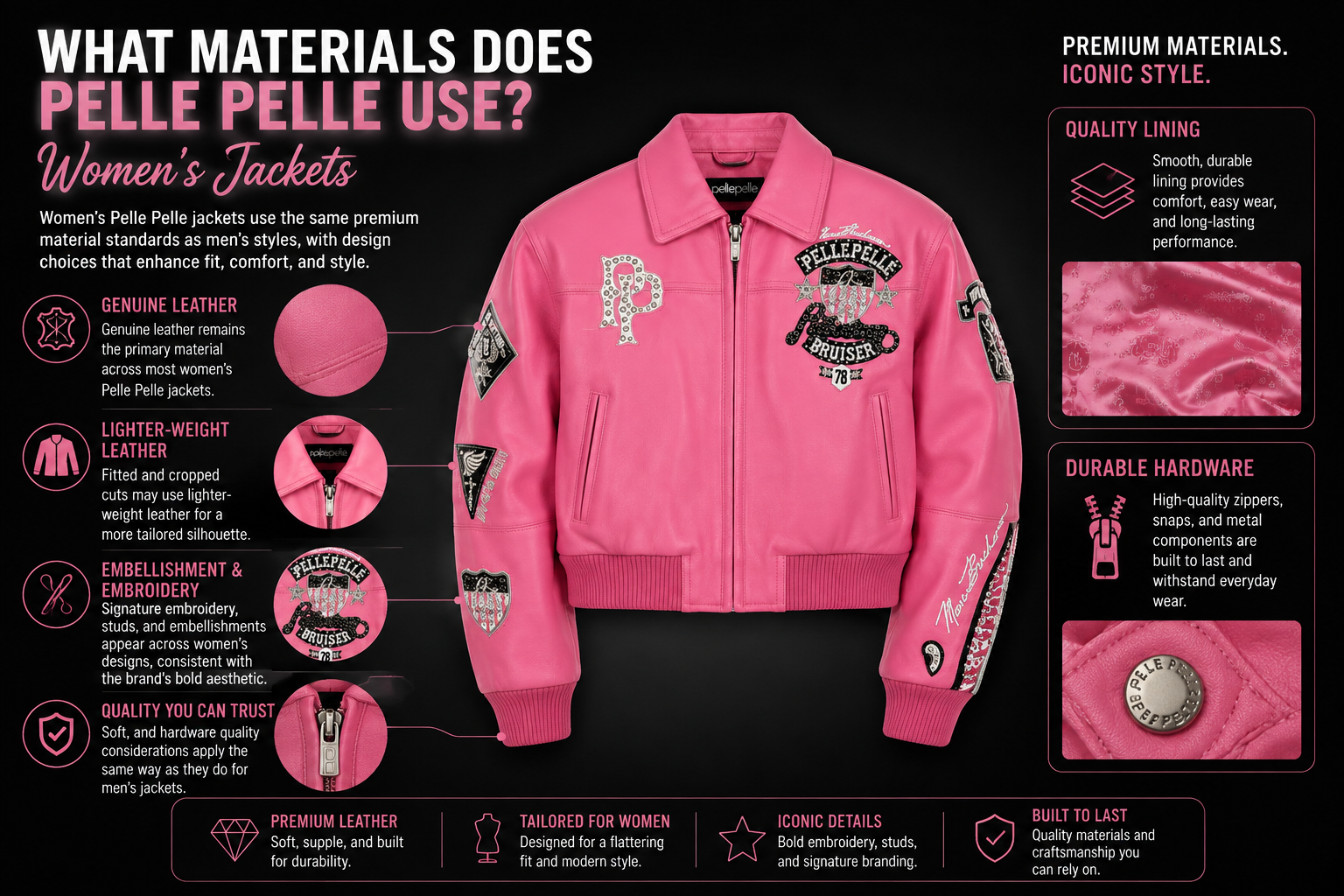
What Materials Does Pelle Pelle Use Women’s Jackets
Women’s Pelle Pelle jackets generally use the same core material categories as men’s styles, with some differences in application.
Key points:
- Genuine leather remains the primary material across most women’s styles.
- Fitted and cropped cuts may use lighter-weight leather for a more tailored silhouette.
- Embellishment and embroidery detailing appear across women’s designs as well, consistent with the brand’s overall aesthetic.
- Lining and hardware quality considerations apply the same way as they do for men’s jackets.
Pelle Pelle Vintage vs. Current Materials
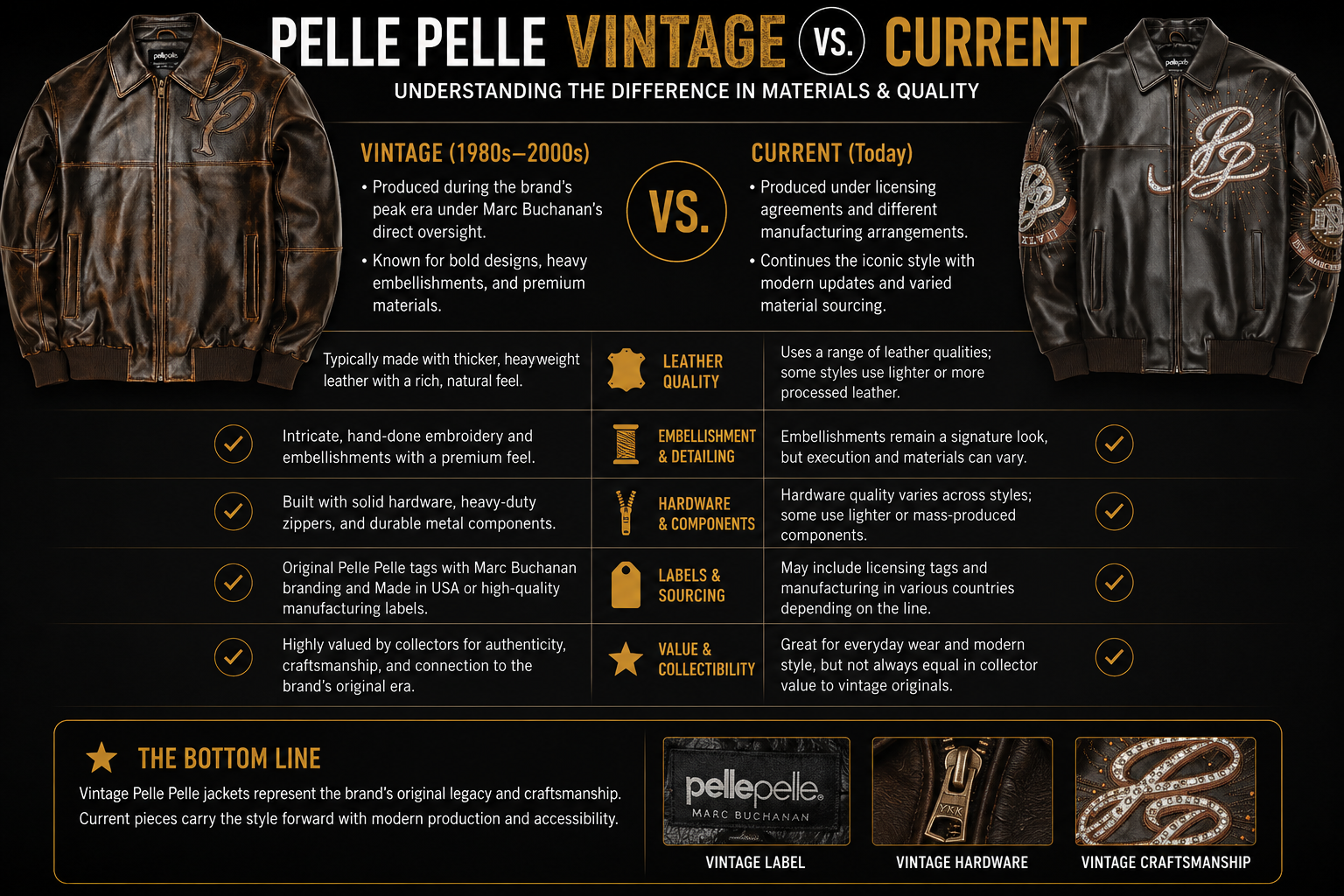
Comparing vintage Pelle Pelle pieces to current production requires understanding how materials and sourcing have changed over the brand’s history.
Key points:
- Vintage pieces from the brand’s peak era (1980s-2000s) were produced under Marc Buchanan’s original direct oversight.
- The brand has gone through licensing changes since then, meaning current products may be produced under different manufacturing arrangements.
- Material quality can vary between vintage originals and newer licensed production, which is why checking specific sourcing matters.
- Vintage pieces in good condition are often valued by collectors partly because of this direct connection to the brand’s original era.
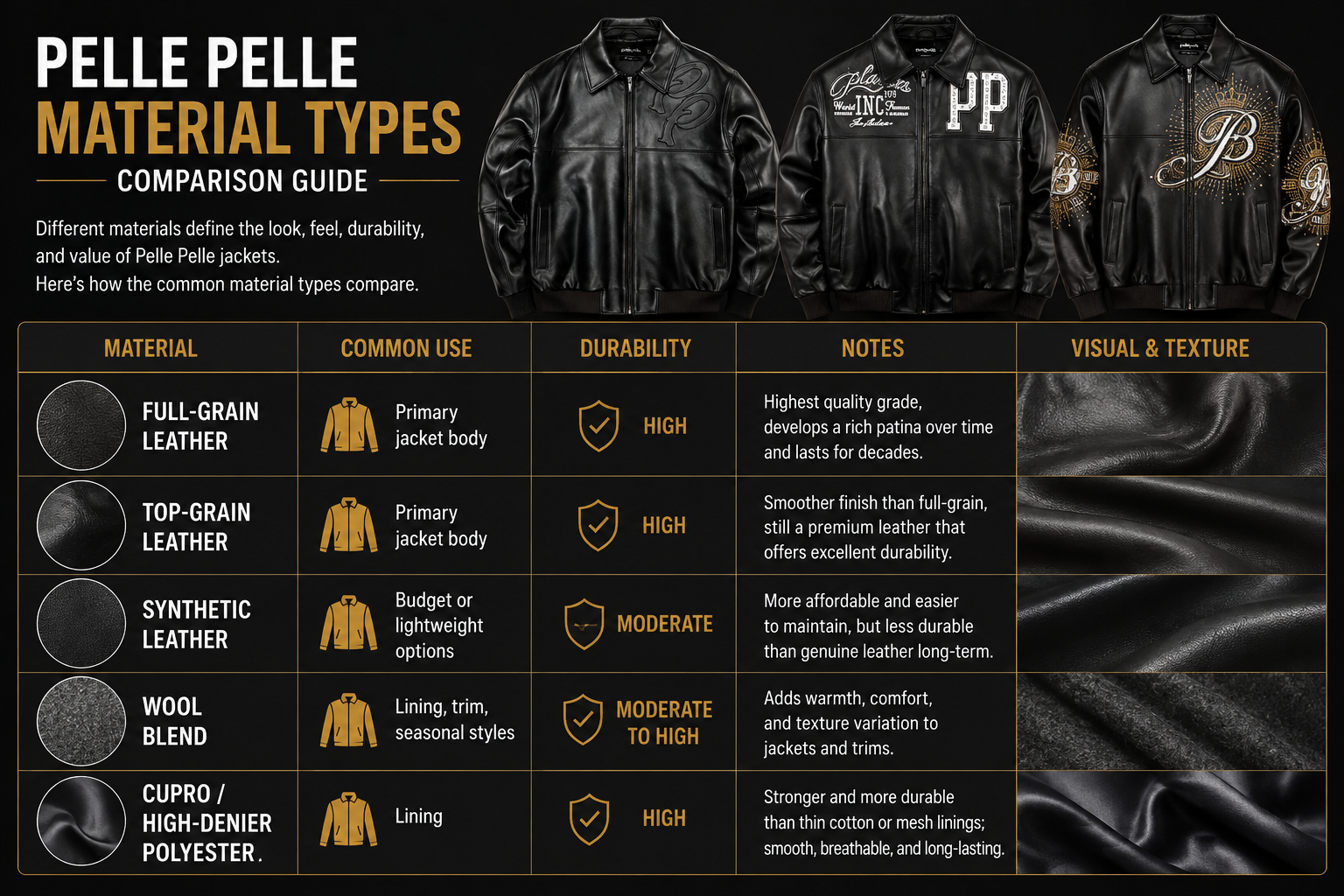
Comparison Table Material Types
| Material | Common Use | Durability | Notes |
|---|---|---|---|
| Full-grain leather | Primary jacket body | High | Highest quality grade, develops patina |
| Top-grain leather | Primary jacket body | High | Smoother finish, still premium |
| Synthetic leather | Budget or lightweight options | Moderate | Less durable than genuine leather long-term |
| Wool blend | Lining, trim, seasonal styles | Moderate to high | Adds warmth and texture variation |
| Cupro/high-denier polyester | Lining | High | More durable than thin cotton or mesh lining |
How to Evaluate Material Quality
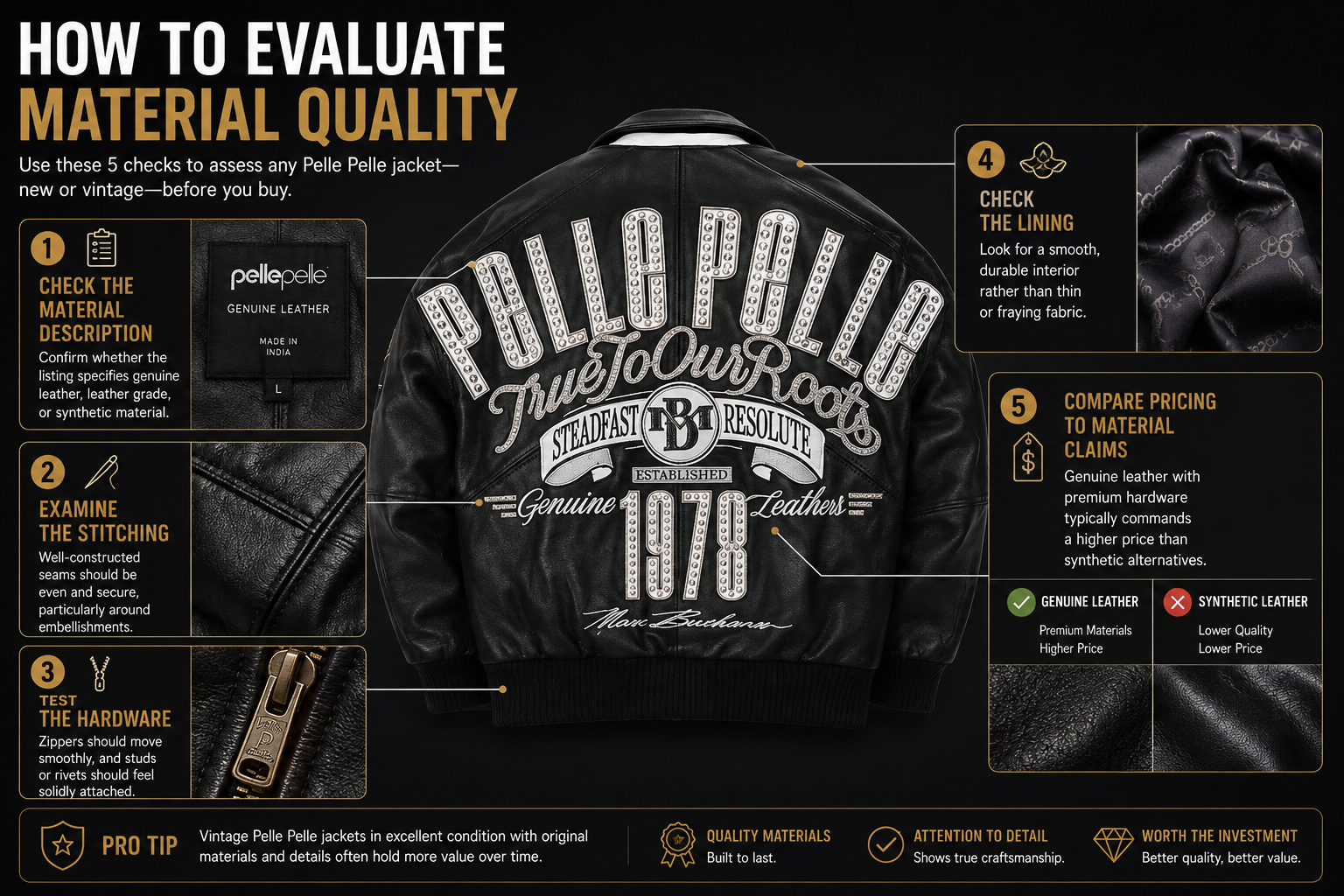
If you’re assessing a specific Pelle Pelle jacket, whether new or vintage, these checks help gauge material quality:
- Step 1: Check the material description, confirm whether the listing specifies genuine leather, leather grade, or synthetic material.
- Step 2: Examine the stitching, well-constructed seams should be even and secure, particularly around embellishments.
- Step 3: Test the hardware, zippers should move smoothly, and studs or rivets should feel solidly attached.
- Step 4: Check the lining, look for a smooth, durable interior rather than thin or fraying fabric.
- Step 5: Compare pricing to material claims, genuine leather with premium hardware typically commands a higher price than synthetic alternatives.
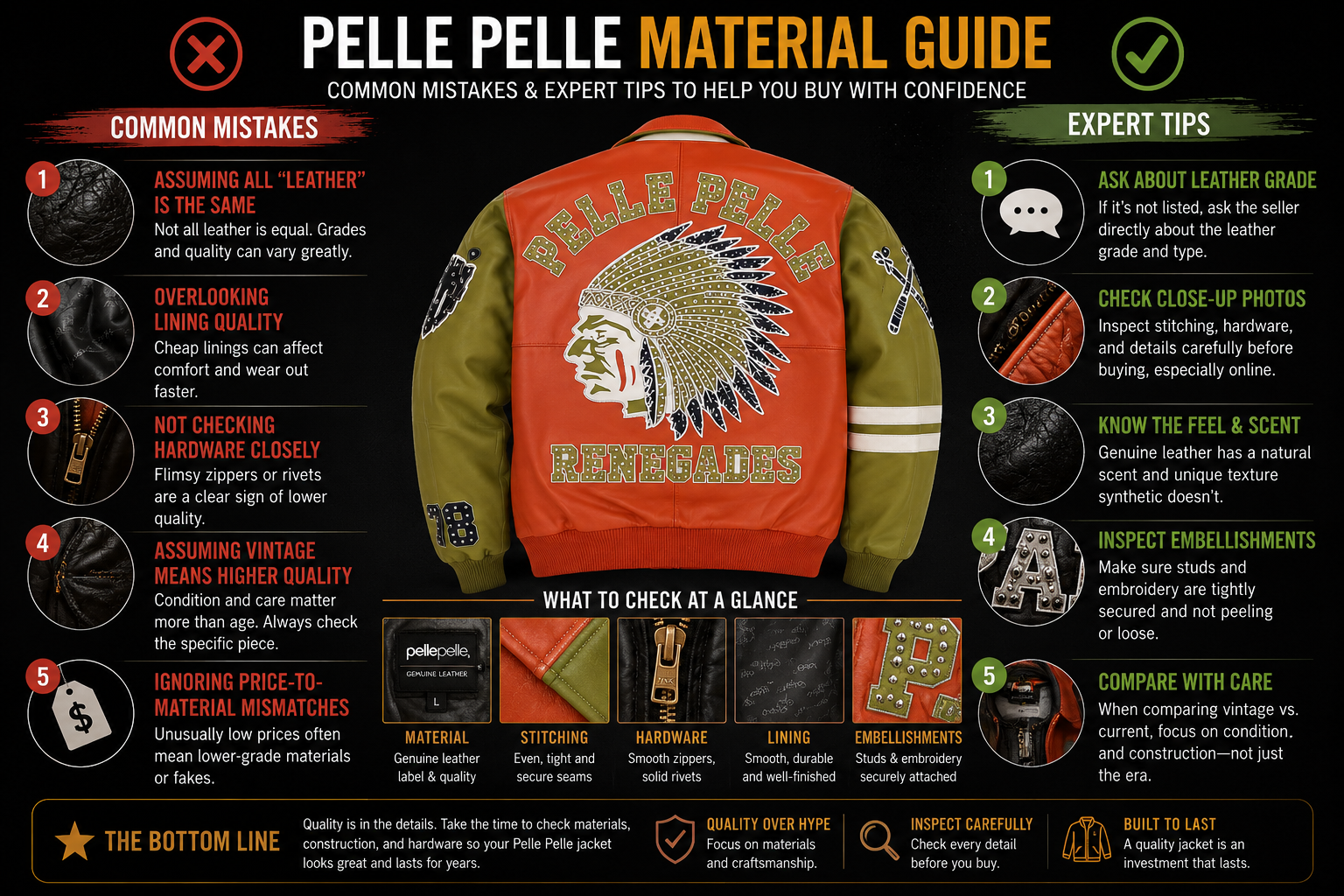
Common Mistakes
Avoid these mistakes when evaluating a Pelle Pelle jacket’s materials:
- Mistake 1: Assuming all listings labeled “leather” use the same grade or quality.
- Mistake 2: Overlooking lining quality, which affects comfort and longevity.
- Mistake 3: Not checking hardware closely, since flimsy zippers or rivets are an easy quality indicator.
- Mistake 4: Assuming vintage automatically means higher quality without checking the specific piece’s condition.
- Mistake 5: Ignoring price-to-material mismatches, where unusually low prices often signal lower-grade materials.
Expert Tips
- Tip 1: Ask the seller directly about leather grade if it isn’t listed clearly in the product description.
- Tip 2: Check close-up photos of stitching and hardware before buying online, especially for vintage pieces.
- Tip 3: Genuine leather typically has a distinct natural scent and texture compared to synthetic alternatives.
- Tip 4: For embellished styles, check that studs and embroidery are securely attached, not loose or peeling.
- Tip 5: When comparing vintage and current pieces, factor in condition and construction quality individually rather than assuming era alone determines quality.
Buying Guide
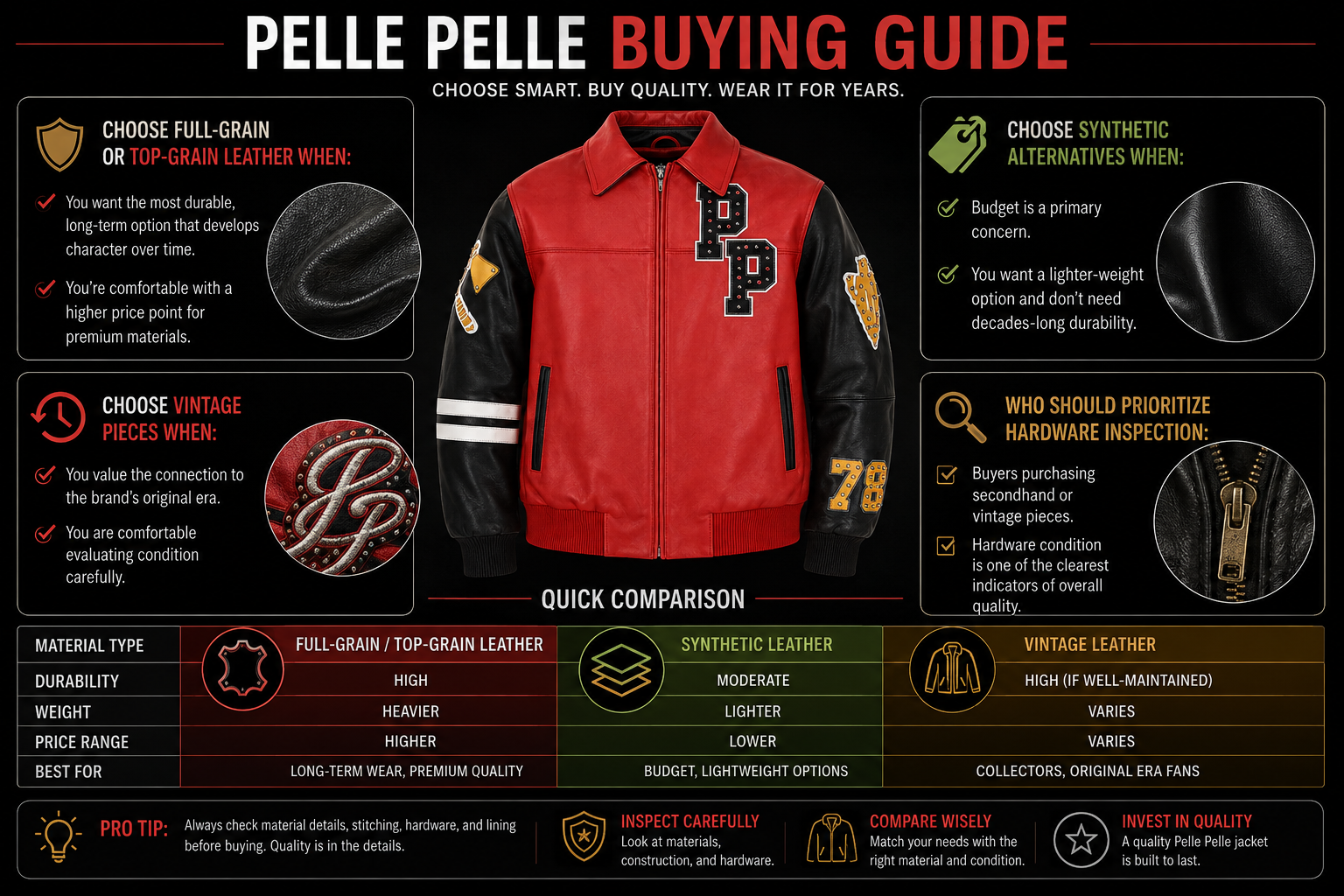
Use this to decide what to prioritize based on your needs:
- Choose full-grain or top-grain leather when:
- You want the most durable, long-term option that develops character over time.
- You’re comfortable with a higher price point for premium materials.
- Choose synthetic alternatives when:
- Budget is a primary concern.
- You want a lighter-weight option and don’t need decades-long durability.
- Choose vintage pieces when:
- You value the connection to the brand’s original era and are comfortable evaluating condition carefully.
- Who should prioritize hardware inspection:
- Buyers purchasing secondhand or vintage pieces, since hardware condition is one of the clearest indicators of overall quality.
Why Choose Us
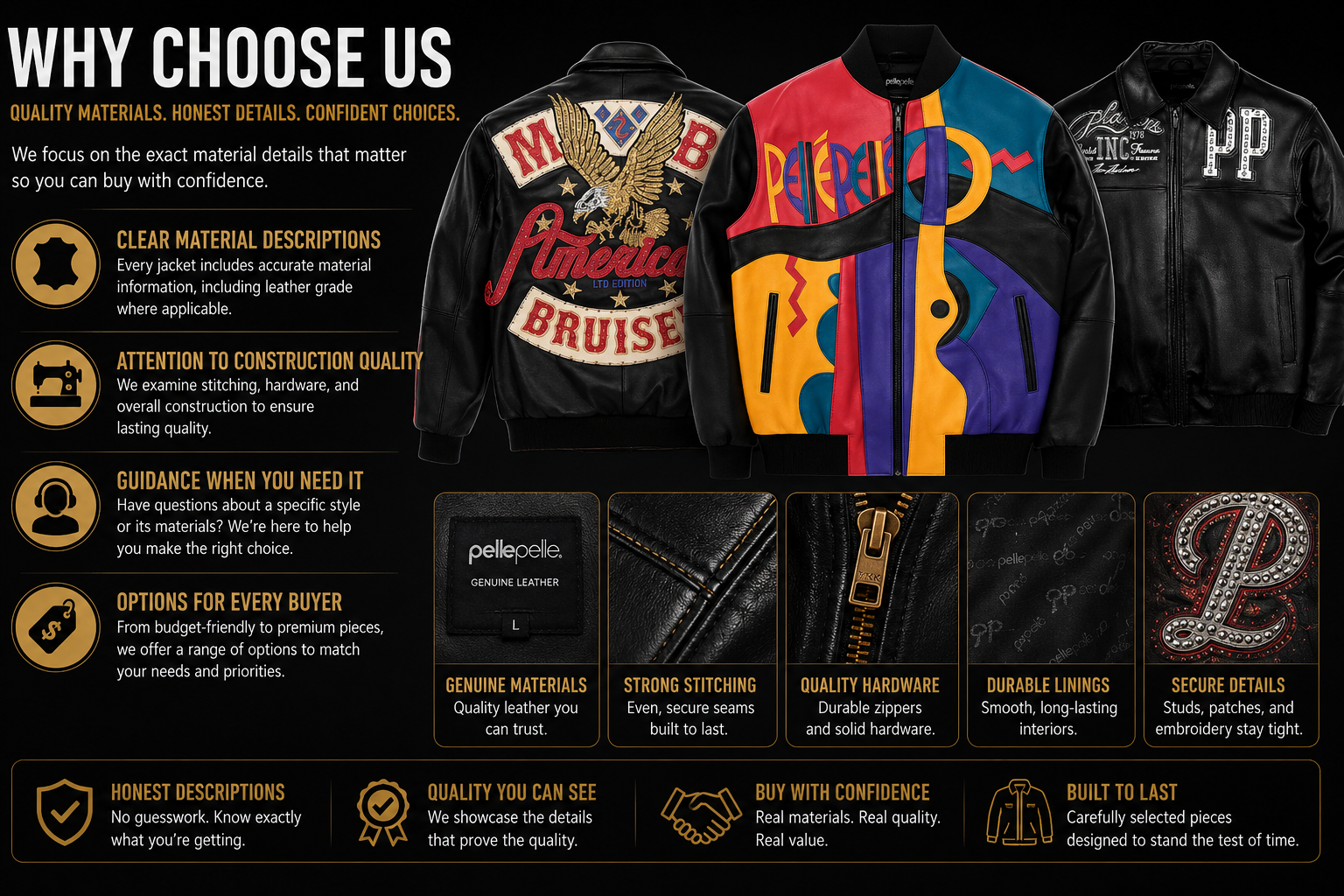
We focus on the exact material details covered in this guide:
- Clear material descriptions for every jacket, including leather grade where applicable.
- Attention to construction quality, including stitching and hardware.
- Guidance available if you have questions about a specific style’s materials.
- A range of options for buyers prioritizing different budgets and durability needs.
FAQs
What materials does Pelle Pelle use for its jackets?
Pelle Pelle jackets are primarily made from genuine leather, typically full-grain or top-grain, along with wool blends, synthetic alternatives, and detailed embroidery and hardware.
What materials does Pelle Pelle use for women’s jackets?
Women’s styles use the same core materials as men’s jackets, primarily genuine leather, with some styles using lighter-weight leather for a more fitted silhouette.
Is Pelle Pelle leather genuine or synthetic?
The brand primarily uses genuine leather, though some styles offer synthetic leather alternatives as a lower-cost or lighter-weight option.
What’s the difference between full-grain and top-grain leather?
Full-grain leather retains the hide’s natural texture and is considered the highest quality grade, while top-grain is sanded for a smoother, more uniform finish while remaining high quality.
Are vintage Pelle Pelle jackets made from better materials than current ones?
Not necessarily better, but vintage pieces were produced under the brand’s original direct oversight, while current production may involve different licensed manufacturing arrangements, so checking each specific piece matters.
What lining material do Pelle Pelle jackets use?
Higher-quality linings use materials like cupro or high-denier polyester, though lining quality can vary between styles and production eras.
What hardware does Pelle Pelle use on its jackets?
Quality Pelle Pelle jackets typically feature durable branded zippers and solid metal rivets or studs rather than lightweight plated hardware.
How can I tell if a Pelle Pelle jacket uses genuine leather?
Genuine leather typically has a distinct natural scent and texture, visible pores, and a price point consistent with premium materials, unlike synthetic alternatives.
Does Pelle Pelle use wool in its jackets?
Yes, wool blends appear in certain styles, often for lining, trim, or specific seasonal designs.
Why does material quality matter when buying a Pelle Pelle jacket?
Material quality directly affects how long the jacket lasts, how it ages over time, and whether it holds up to regular wear, making it an important factor beyond just style.
Explore Leather Jackets Built to Last
If you’re shopping for a jacket with the same attention to material quality covered in this guide, we can help you find the right fit. Reach out with any questions about leather grade, construction, or specific styles, and we’ll help you choose a piece built to hold up over time.
